
- Home
- Visual Identity vs Brand Identity: What’s the Difference?
Visual Identity vs Brand Identity: What’s the Difference?
Visual identity is what your brand looks like: its logo, colours, typography, imagery, and graphic style. Brand identity is broader. It includes visual identity alongside the positioning, personality, values, voice, and experience that define what the brand stands for.
Put simply, visual identity is one expression of brand identity. The two work together, but they are not interchangeable.
The Simple Answer
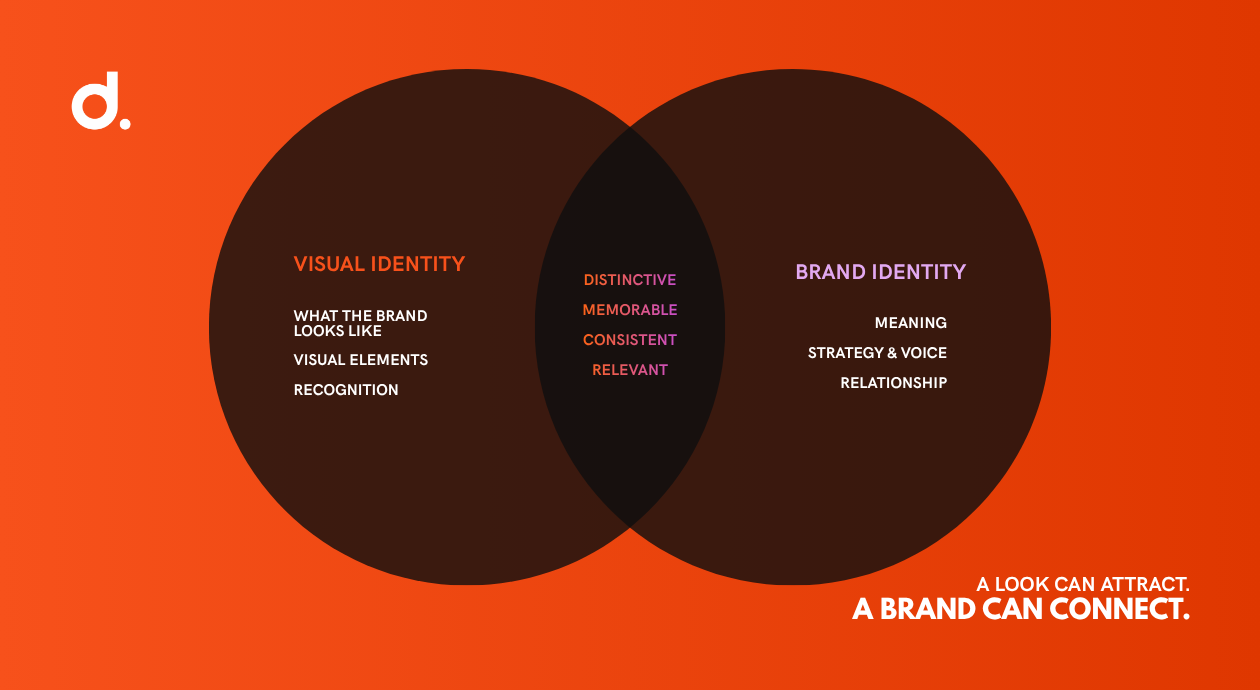
The difference between visual identity and brand identity comes down to appearance versus meaning.
Visual Identity in One Sentence
Visual identity is the system of visible elements that helps people recognize a brand at a glance.
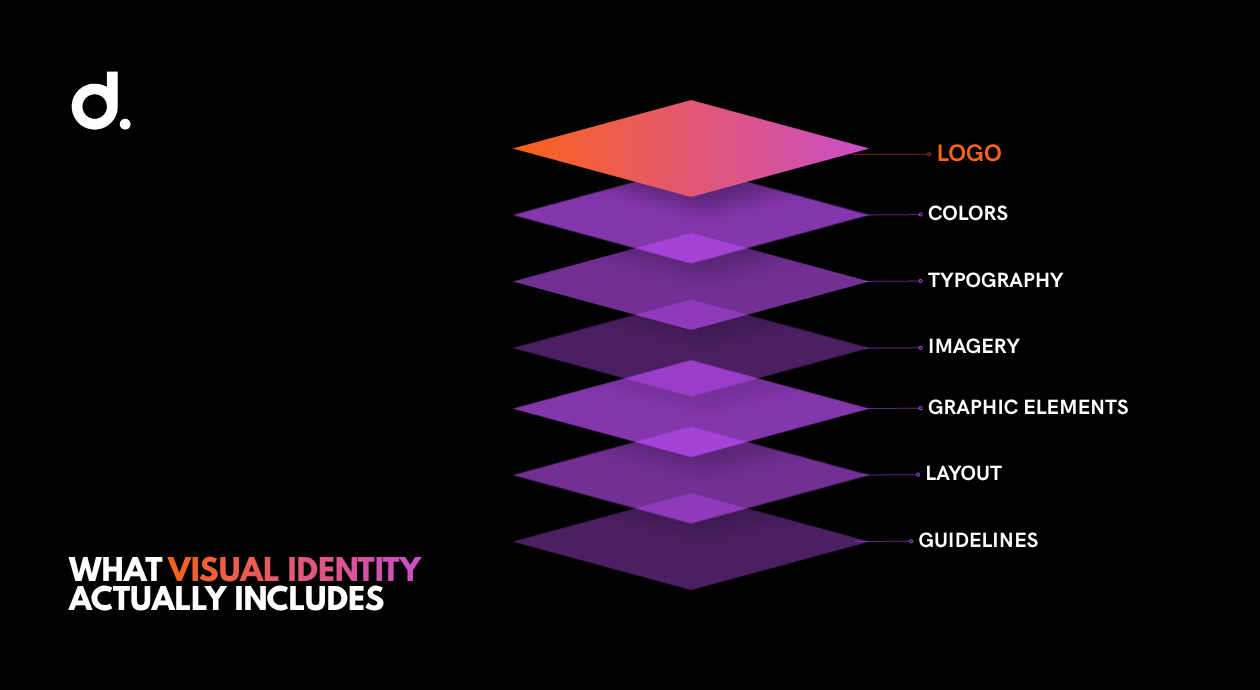
It includes the logo, colours, typography, images, icons, patterns, layouts, and other design elements used across the website, social media, packaging, advertising, and printed materials.
Brand Identity in One Sentence
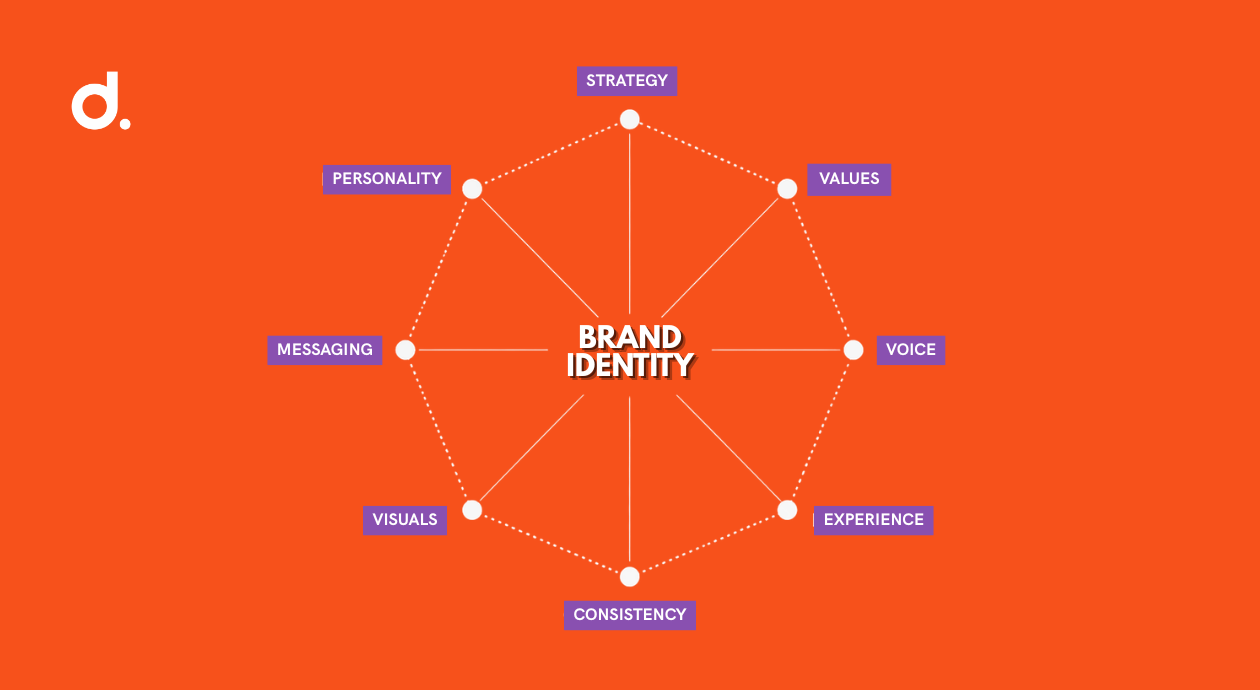
Brand identity is the complete system a company deliberately creates to define who it is, who it serves, what it stands for, and how it should be experienced.
It includes visual identity, but also covers positioning, personality, messaging, values, voice, story, and customer experience.
Here is the difference at a glance:
| Visual identity | Brand identity |
|---|---|
| What the brand looks like | What the brand is and represents |
| Logo, colours, typography, imagery | Positioning, values, voice, personality, experience |
| Primarily visual | Strategic, visual, verbal, and experiential |
| Helps people recognize the brand | Helps people understand and trust the brand |
| Usually created by visual designers | Usually requires strategy, research, writing, and design |
| One part of brand identity | The complete designed brand system |
A logo can make a company look professional.
A full brand identity explains why that company matters.
The Complete Brand Terminology Decoder
Branding language becomes confusing because several related terms are regularly used as if they mean the same thing.
They do not.
| Term | What it actually means |
|---|---|
| Brand | The perception and reputation that exist in customers’ minds. A company can influence its brand, but it cannot fully control it. |
| Branding | The ongoing process of shaping that perception through strategy, communication, design, behaviour, and customer experience. |
| Brand identity | The complete system a business deliberately creates to shape how it is understood. It includes strategy and every visual, verbal, and experiential expression of that strategy. |
| Visual identity | The visible part of brand identity, including the logo, colour palette, typography, imagery, graphic elements, and layout. |
| Corporate identity | An older and more formal term that overlaps with brand identity. It is still commonly used by corporations, institutions, and B2B organisations. |
| Brand image | How customers currently perceive the brand in reality. It may or may not match the identity the company intended to create. |
| Logo | One identifying mark within the visual identity. It is not the complete visual identity and certainly not the complete brand. |
Think of it this way:
A company creates a brand identity.
It uses branding to express and reinforce that identity.
Customers form a brand image based on what they see and experience.
That perception becomes the company’s brand.
The logo is involved, but it is only one small part of the process.
What Visual Identity Actually Includes
A visual identity is not simply a logo with two matching colours.
It is a usable design system that allows the brand to remain recognisable across different formats, channels, teams, and campaigns.
Logo Design and Variations
A complete logo system may include:
- Primary logo
- Secondary logo
- Wordmark
- Icon or symbol
- Horizontal and vertical arrangements
- Full-colour version
- Single-colour version
- Light and dark-background versions
- Small-scale version for favicons and profile images
The objective is not to create as many logo versions as possible.
It is to make sure the brand remains identifiable wherever the logo appears.
A horizontal logo that works in a website header may not work inside a circular social profile image. A detailed symbol may become unreadable at favicon size.
A visual identity accounts for those real uses from the beginning.
Colour System
A professional colour system usually includes:
- Primary colours
- Secondary colours
- Accent colours
- Neutral colours
- Background colours
- Contrast requirements
- Usage proportions
It should also specify the correct colour values for different applications:
- HEX for websites
- RGB for digital use
- CMYK for print
- Pantone where accurate physical reproduction is required
The colour palette should help distinguish the brand while remaining practical and accessible.
Choosing one attractive colour is not the same as building a colour system.
Typography
Typography defines how written information appears.
The system may specify:
- Display or headline font
- Body font
- Supporting font
- Digital alternatives
- Size hierarchy
- Font weights
- Line spacing
- Letter spacing
- Capitalisation rules
- Usage across websites, presentations, advertisements, and documents
Typography influences how a brand feels before the words are even read.
A heavy geometric typeface can feel bold and contemporary. A traditional serif may feel established and editorial. A rounded font may feel casual or approachable.
The choice should support the intended brand personality, not simply follow a design trend.
Photography and Imagery
Two companies can use the same logo and colours but still feel completely different because of their photography.
An imagery direction may define:
- Subject matter
- Lighting
- Composition
- Backgrounds
- Cropping
- Colour treatment
- Level of polish
- Use of people
- Product presentation
- Stock photography rules
Without clear direction, one social post may use bright lifestyle photography while the website uses dark corporate images and advertisements use generic stock photos.
Each piece may look acceptable alone.
Together, they do not build recognition.
Graphic Elements
Visual identity may also include:
- Icons
- Illustrations
- Patterns
- Shapes
- Textures
- Frames
- Lines
- Data-visualisation styles
- Motion principles
- Video treatments
These elements are especially important when a business produces large amounts of content.
A logo does not need to appear prominently on every graphic when the wider visual language is already recognisable.
Layout and Composition
Layout principles control how different elements work together.
They may cover:
- Grids
- Spacing
- Alignment
- White space
- Image placement
- Text hierarchy
- Button treatment
- Card design
- Presentation structure
Digital Shaping’s website development work brings these identity elements into the customer’s digital experience, where visual consistency must also support usability and conversion.
Visual Brand Guidelines
The final visual system should be documented.
Visual guidelines normally explain:
- How to use the logo
- How not to use the logo
- Approved colours
- Typography hierarchy
- Imagery direction
- Layout rules
- Graphic elements
- Examples of applications
- Accessibility considerations
- File and production specifications
Without documentation, even a strong visual identity begins to change as more people use it.
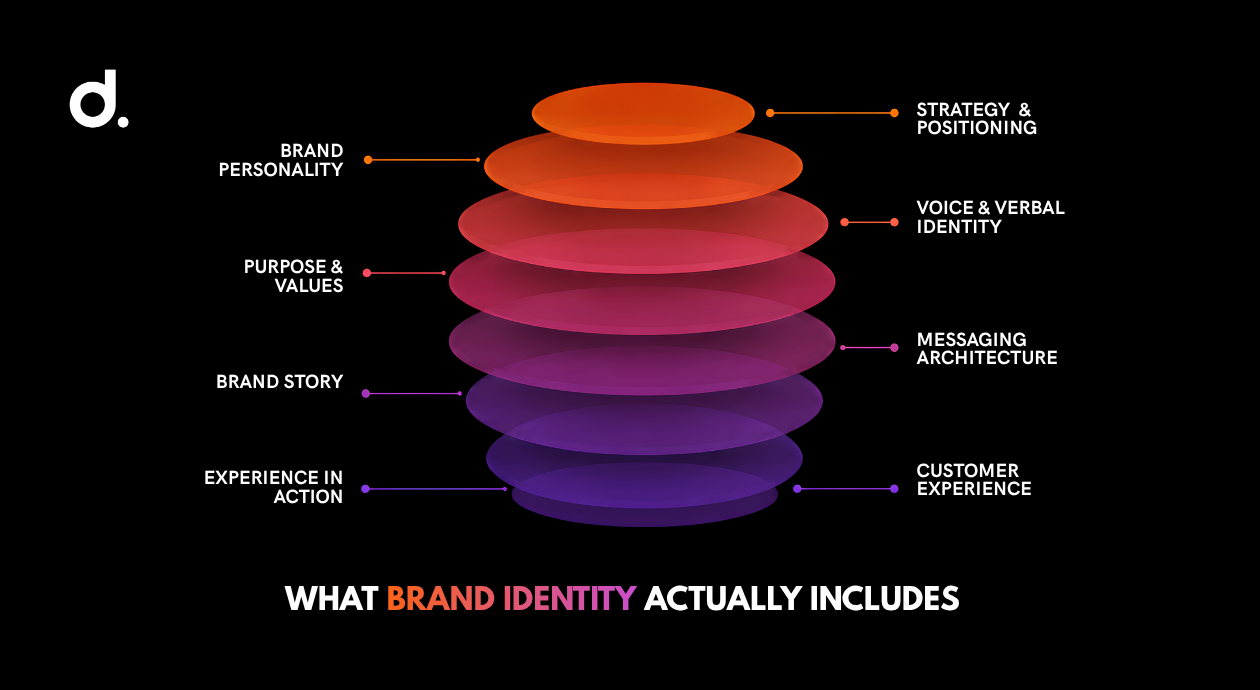
What Brand Identity Includes Beyond the Visuals
Brand identity answers the questions a visual designer should not be expected to guess.
Who is the company for?
What should it be known for?
How is it different?
What does it believe?
How should it sound?
What experience should customers expect?
Digital Shaping’s Brand Strategy and Identity service connects this strategic foundation with the visual and verbal system used to express it. Digital Shaping positions the service around clear market positioning, a recognisable identity, brand voice, and messaging that helps a business stand apart.
Brand Strategy and Positioning
Brand positioning defines the place a business wants to occupy in the customer’s mind.
It should clarify:
- Target audience
- Customer problem
- Market category
- Competitive alternatives
- Meaningful difference
- Core benefit
- Evidence supporting the claim
Compare these statements:
We provide outstanding accounting services and personalised support.
We help ecommerce companies earning between $2 million and $20 million improve cash-flow visibility and prepare for their next stage of growth.
The first describes a generally positive business.
The second gives the brand a position.
Strong positioning helps customers quickly decide whether a company is relevant to them.
Brand Personality
Brand personality describes the human characteristics associated with the company.
A brand may be:
- Bold or restrained
- Serious or playful
- Traditional or progressive
- Formal or conversational
- Luxurious or accessible
- Challenging or reassuring
- Technical or plain-spoken
These choices should influence more than the design.
A brand described as approachable should not send stiff, legalistic emails.
A brand described as decisive should not fill its website with vague qualifications.
A brand described as simple should not have a confusing sales process.
Brand Voice and Verbal Identity
Brand voice governs how the company communicates.
It includes:
- Tone
- Vocabulary
- Sentence style
- Formality
- Message hierarchy
- Taglines
- Product naming
- Calls to action
- Company descriptions
- Words the brand avoids
Wendy’s is often recognised for a bold and humorous social voice. A professional legal or financial company may require a calmer, more considered style.
Neither voice is automatically stronger.
The right voice is the one that fits the positioning, audience, and customer context.
Purpose and Values
Purpose explains why the organisation exists beyond generating revenue.
Values describe the principles that guide its decisions.
They become part of brand identity only when they influence real behaviour.
A company may claim that accessibility matters. Its website, products, customer support, and physical locations should support that promise.
A company may claim that sustainability matters. Its sourcing, packaging, partnerships, and operational decisions should provide evidence.
Values written on a wall are not a brand identity.
Values reflected in repeated choices are.
Messaging Architecture
Messaging architecture organises what the company needs to say.
It may include:
- Core value proposition
- Primary brand message
- Supporting messages
- Audience-specific messages
- Product or service messages
- Proof points
- Tagline
- Elevator pitch
- Objection responses
This prevents every salesperson, marketer, and website page from describing the company differently.
Brand Story
A brand story connects the origin, problem, purpose, and direction of the business.
It may explain:
- Why the company began
- What the founder experienced
- What was missing from the market
- What the business wants to change
- What it has learned
- Where it is going
The story should be real and relevant.
A manufactured story may create attractive copy, but it rarely creates lasting trust.
Customer Experience Principles
Brand identity is also delivered through experience.
That includes:
- How quickly the company responds
- How it handles mistakes
- How the buying process works
- How employees communicate
- How products arrive
- How onboarding feels
- What happens after the sale
A company cannot claim to be easy to work with while making customers chase three departments for an answer.
The experience is where the identity becomes believable.
How Visual Identity and Brand Identity Work Together
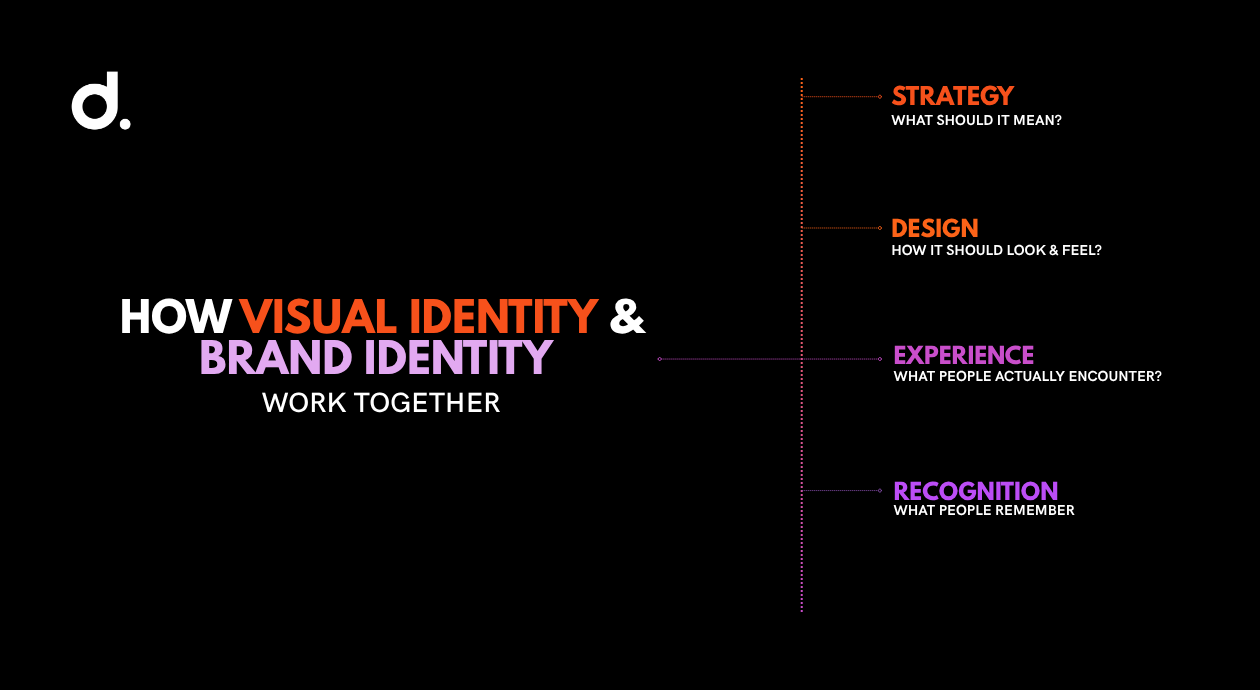
Brand identity gives the visual identity direction.
Visual identity gives the brand identity a recognisable form.
The relationship works like this:
Strategy decides what the brand should mean.
Design decides how that meaning should look and feel.
Suppose a new financial platform wants to be positioned as a calm, straightforward alternative to complicated enterprise software.
That strategic choice may influence the visual identity through:
- Clear layouts
- Restrained colours
- Legible typography
- Simple diagrams
- Uncluttered screens
- Direct product imagery
If the same company instead used chaotic layouts, aggressive colours, and highly technical graphics, the visual identity would contradict the intended positioning.
The design might still be good.
It would not be right for the brand.
Visual Identity Without Brand Identity
Visual identity without strategic brand identity often produces attractive but arbitrary work.
The designer has no clear answers about:
- Audience
- Positioning
- Personality
- Differentiation
- Values
- Message
The result may look professional while resembling every competitor.
It is design without enough reason behind the choices.
Brand Identity Without Visual Identity
The opposite problem also occurs.
A company may have excellent positioning, a clear purpose, and strong messaging sitting inside a strategy document.
If none of it is translated into a coherent logo, website, typography, imagery, content, or customer-facing system, customers never experience it.
The strategy remains an internal idea.
Visual identity is what people see. Brand identity is why those visual choices matter.
Do You Need Visual Identity or Brand Identity?
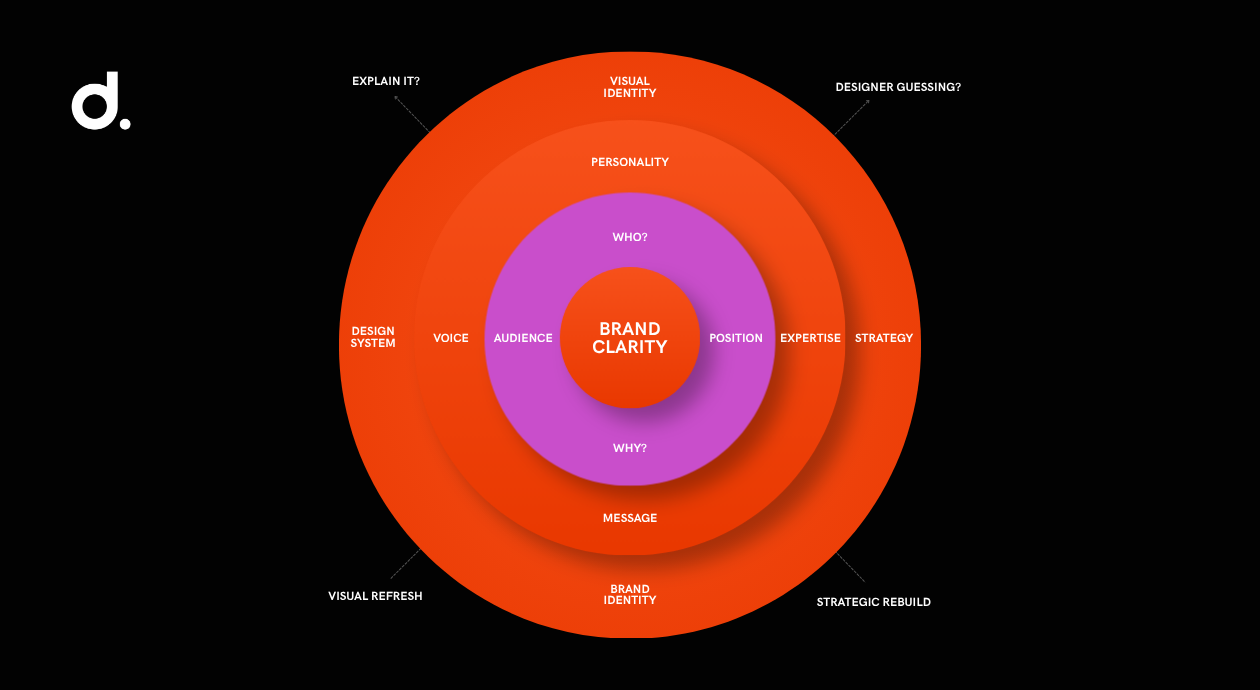
Use this two-question test before asking an agency or designer for a proposal.
Question 1: Can You Clearly Explain the Brand?
Can you confidently describe:
- Who the business is for?
- What problem it solves?
- Which category it competes in?
- Why customers should choose it?
- What personality it should have?
- What it should be known for?
If the answers are already clear, well-tested, and still relevant, you may only need visual identity work or a visual refresh.
The strategy exists.
The visual system needs to express it more effectively.
Question 2: Would the Designer Have to Guess?
Would a designer have to guess:
- Who your audience is?
- What makes the business different?
- Whether the brand should feel premium or accessible?
- Whether the voice should be bold or reassuring?
- Which message should appear first?
- What the visual design is supposed to communicate?
If the answer is yes, you need brand identity development before, or alongside, visual design.
The designer is not simply choosing colours.
They are being asked to make strategic decisions without a strategic process.
You Probably Need Visual Identity Work When:
- Your positioning remains relevant.
- Customers understand what you do.
- The business has not significantly changed.
- Your current design looks dated or inconsistent.
- The logo does not work across modern applications.
- Different teams are creating disconnected materials.
- You need a clearer design system and guidelines.
You Probably Need Comprehensive Brand Identity Work When:
- You are starting a new company.
- Your audience has changed.
- You are entering a new market.
- Your services or business model have changed.
- Customers regularly misunderstand what you do.
- You cannot explain what makes you different.
- Your messaging changes between channels.
- You are merging or separating brands.
- The visual problem is rooted in a strategy problem.
Brand Identity Examples: The Strategy Can Stay While the Visuals Change
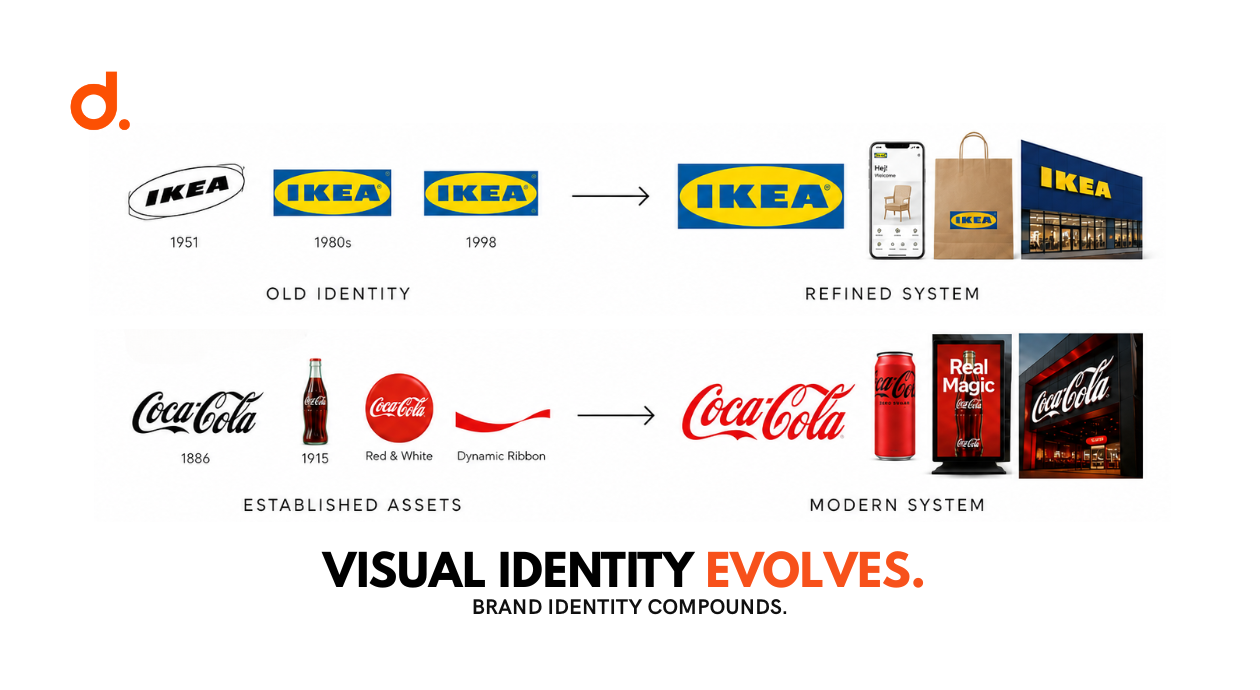
A visual identity does not need to remain frozen forever.
It can evolve while the deeper brand identity remains recognisable.
IKEA: Updating the Logo Without Changing What IKEA Means
IKEA’s identity has long centred on accessible Scandinavian design, practical home furnishing, affordability, and self-service retail.
Its logo has changed several times.
IKEA’s official history shows versions of the logo from 1951 through 2018. Before the 2018 update, the logo had remained largely unchanged since the 1980s. The later refinements improved legibility and helped the logo reproduce consistently across storefronts, mobile screens, paper bags, and other applications. (IKEA’s official brand history)
The visual identity evolved.
The underlying idea of IKEA did not suddenly become something else.
This is a visual identity update built on stable brand identity.
Coca-Cola: Refreshing the System While Preserving the Assets
Coca-Cola provides an even stronger example of continuity.
Its Spencerian script dates back to the company’s earliest years, while its contour bottle was developed in 1915 to create a package people could recognise even in the dark or when broken. (Coca-Cola’s trademark history)
In July 2026, Coca-Cola introduced a new global visual identity system.
The system updated how the brand appears across packaging, retail environments, equipment, and digital experiences, but retained and strengthened recognisable assets including the red-and-white palette, Spencerian script, Dynamic Ribbon, and Arden Square. (Coca-Cola’s 2026 visual identity announcement)
That is the point of a thoughtful visual refresh.
It improves how the brand functions now without erasing the recognition already built.
What Does Visual Identity vs Brand Identity Cost?
Branding costs vary dramatically because the term “brand identity” can describe very different scopes.
One provider may use it to mean:
- Logo
- Colour palette
- Typography
- Basic guidelines
Another may include:
- Customer research
- Competitive analysis
- Positioning
- Messaging
- Verbal identity
- Visual identity
- Brand guidelines
- Website direction
- Launch support
Those are not comparable projects.
Metabrand, a branding agency, states that its visual-identity-only projects typically range from $5,000 to $30,000, depending on complexity, applications, and agency positioning.
It places comprehensive brand identity work, including strategy and visual execution, between $15,000 and $100,000 or more. It also describes phased strategy work at approximately $8,000 to $30,000, followed by a separate visual-identity phase. (Read Metabrand’s published scope and pricing explanation)
These are one agency’s stated ranges, not a universal industry benchmark.
Freelancers, small studios, specialist agencies, and global consultancies may charge very different amounts.
The useful question is not:
How much does branding cost?
Ask:
What problem is this project solving, and exactly what is included?
Questions to Ask Before Hiring Anyone
Ask the provider:
- Does the project include strategy?
- Will you conduct audience or customer research?
- Is positioning included?
- Will you develop messaging and brand voice?
- How many logo options and variations are included?
- Are typography and colour systems included?
- Will you provide editable files?
- Are brand guidelines included?
- Which applications will be designed?
- Who owns the final work?
- What is excluded?
- How will the identity be implemented after delivery?
A cheaper proposal may cover everything you need.
A more expensive proposal may be justified by strategy, research, and application depth.
The title on the proposal tells you very little.
The deliverables tell you what you are buying.
Who Should You Hire?
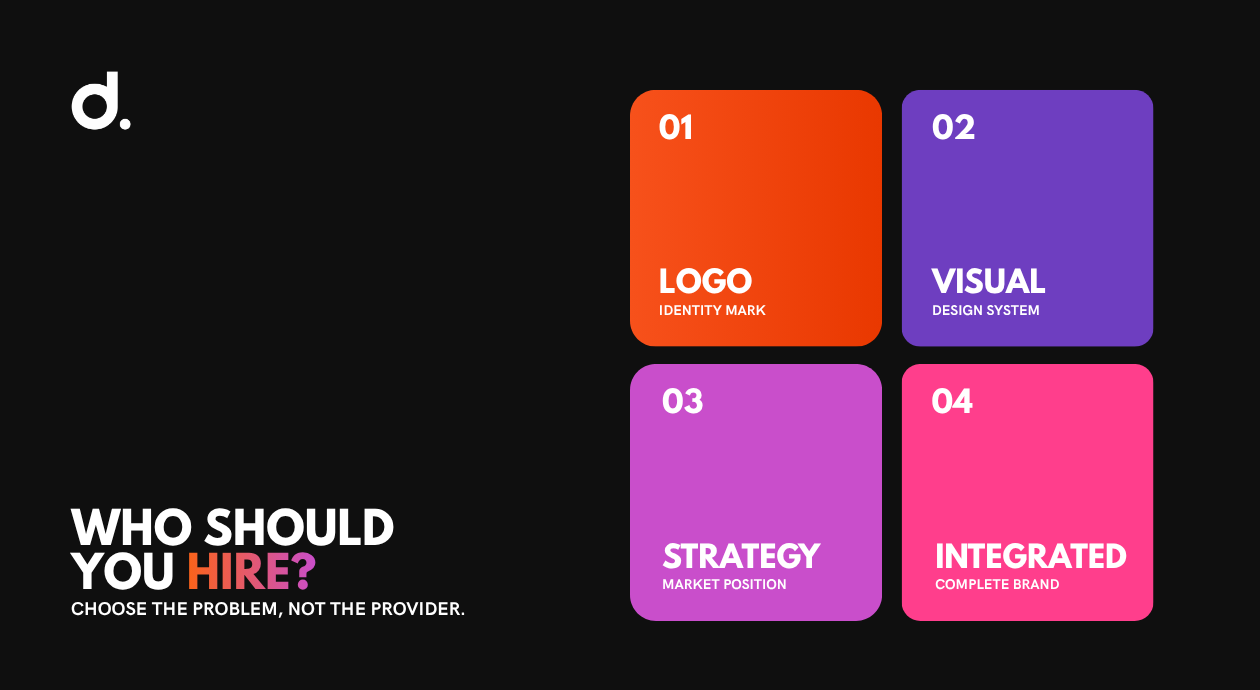
The right provider depends on the problem.
Hire a Logo Designer When:
- You have already defined the strategy.
- You only need a clear identifying mark.
- Your budget and scope are intentionally limited.
- You understand that the result will not be a complete identity system.
Hire a Visual Identity Designer When:
- You need a logo plus a complete visual system.
- Your positioning and audience are already clear.
- You need colours, typography, imagery, layouts, and guidelines.
- Your existing identity needs visual modernisation.
Hire a Brand Strategist When:
- You cannot clearly explain what differentiates the business.
- Your audience or market is changing.
- Your message is inconsistent.
- Your current positioning is not working.
- The strategic questions need to be resolved before design begins.
Hire an Integrated Branding Team When:
- You are creating a new company.
- You are completing a major rebrand.
- Strategy, messaging, visual design, and implementation all need attention.
- You want the work developed as one connected system.
Digital Shaping combines strategy, positioning, voice, identity design, and implementation through its Brand Strategy and Identity service, rather than treating the logo as an isolated design task.
Who Should You Hire?
The right provider depends on the problem.
Hire a Logo Designer When:
- You have already defined the strategy.
- You only need a clear identifying mark.
- Your budget and scope are intentionally limited.
- You understand that the result will not be a complete identity system.
Hire a Visual Identity Designer When:
- You need a logo plus a complete visual system.
- Your positioning and audience are already clear.
- You need colours, typography, imagery, layouts, and guidelines.
- Your existing identity needs visual modernisation.
Hire a Brand Strategist When:
- You cannot clearly explain what differentiates the business.
- Your audience or market is changing.
- Your message is inconsistent.
- Your current positioning is not working.
- The strategic questions need to be resolved before design begins.
Hire an Integrated Branding Team When:
- You are creating a new company.
- You are completing a major rebrand.
- Strategy, messaging, visual design, and implementation all need attention.
- You want the work developed as one connected system.
Digital Shaping combines strategy, positioning, voice, identity design, and implementation through its Brand Strategy and Identity service, rather than treating the logo as an isolated design task.
Common Visual Identity and Brand Identity Mistakes
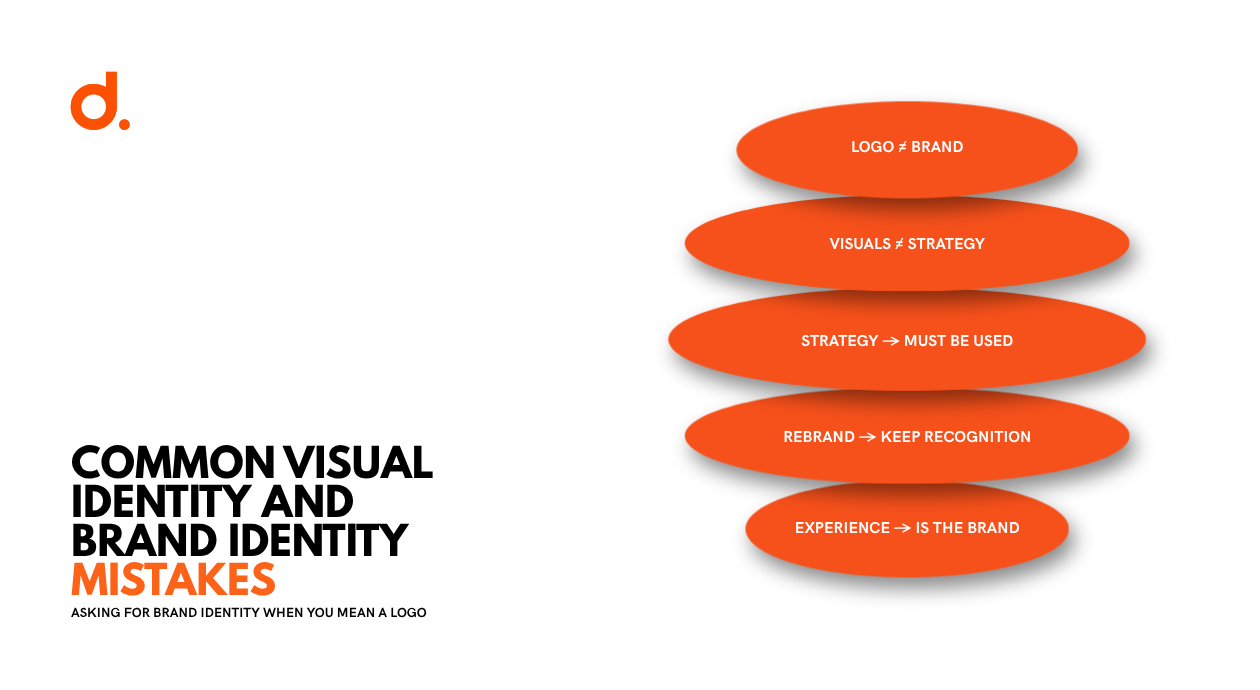
Asking for Brand Identity When You Mean a Logo
Be precise about the expected deliverables.
Requesting “brand identity” may lead a provider to include strategy, messaging, and research when you only expected a visual mark.
Assuming a Logo Is a Complete Visual Identity
A logo does not define typography, colour use, imagery, layouts, social graphics, presentations, web design, or packaging.
The logo may be strong while every other brand touchpoint remains inconsistent.
Assuming Visual Identity Is a Complete Brand Identity
A complete-looking design system cannot replace missing positioning, unclear messaging, or a weak understanding of the customer.
Good visuals can hide a strategy problem temporarily.
They cannot solve it alone.
Expecting Every Visual Designer to Be a Brand Strategist
Some professionals offer both skills.
Not all do.
Visual design and brand strategy require overlapping but distinct expertise. Confirm what the provider is qualified and contracted to deliver.
Creating Strategy That Never Reaches the Customer
A brand strategy document has limited value when it is not translated into:
- Website content
- Sales language
- Visual design
- Social content
- Customer service
- Product experience
- Internal behaviour
Strategy has to become visible and usable.
Rebranding the Visuals When the Problem Is the Experience
A new logo will not fix:
- Slow customer service
- An unclear offer
- Poor product quality
- Inconsistent delivery
- A confusing website
- Weak positioning
Sometimes the design genuinely needs work.
Sometimes the company is using design to avoid a more difficult business problem.
Changing the Visual Identity Without Protecting Recognition
Do not remove familiar brand assets simply because the internal team is tired of them.
Customers see the brand far less often than employees do.
A refresh should identify which visual elements carry recognition before replacing them.
Frequently Asked Questions
What’s the difference between visual identity and brand identity?
Visual identity is the visible part of a brand, including its logo, colours, typography, imagery, and graphic system. Brand identity is broader. It includes the visual identity alongside positioning, personality, values, messaging, voice, story, and customer-experience principles.
Which comes first, visual identity or brand identity?
Brand identity should come first conceptually. A business should understand its audience, positioning, personality, and message before deciding how those ideas should look. Visual design developed without strategic direction may appear professional but fail to differentiate the business or communicate the right meaning.
Can you have visual identity without brand identity?
Yes, but the result is usually less effective. A company can have a logo, colour palette, and typography without having clear positioning or messaging. It may look consistent, but the visual choices will have little strategic foundation and may not help customers understand why the business is different.
Can a brand identity exist without visual identity?
A business can define its strategy, purpose, personality, and messaging before creating visual assets. However, customers need a way to experience and recognise those ideas. Without visual and verbal execution, the brand identity remains an internal concept rather than a complete customer-facing system.
Is brand identity the same as branding?
No. Brand identity is the designed system a business creates to define and express itself. Branding is the continuing process of applying that identity through communication, design, behaviour, marketing, and customer experience to influence how people perceive the business.
What is corporate identity vs brand identity?
Corporate identity is an older term that overlaps heavily with brand identity. It is still common in institutional and B2B contexts. Modern brand identity often places greater emphasis on customer perception, personality, voice, experience, and emotional meaning alongside traditional corporate design and communication.
Is a logo part of visual identity?
Yes. A logo is one part of visual identity. The wider visual identity also includes colour, typography, imagery, patterns, graphic elements, layouts, and guidelines governing how all those assets are used together.
How much does visual identity cost?
Cost depends on the designer, agency, research, number of applications, and depth of the system. One agency, Metabrand, states that visual-identity-only projects typically range from $5,000 to $30,000, but this should be treated as that provider’s pricing experience rather than a fixed market standard.
Do small businesses need a complete brand identity?
Not every small business needs an expensive, comprehensive rebrand immediately. It does need basic clarity about its audience, offer, difference, and personality. A simple visual identity can be enough at an early stage when it is supported by sound positioning and can expand as the business grows.
Visual Identity Is What People See. Brand Identity Is Why It Matters.
The difference is not complicated once the hierarchy is clear.
Your logo is part of your visual identity.
Your visual identity is part of your brand identity.
Your brand identity is one of the tools you use to influence the brand customers eventually hold in their minds.
Before your next branding conversation, run the two-question test:
Can you clearly explain who the brand is, who it serves, and why it is different?
Would a designer have to guess?
If the designer would be guessing, start with brand identity.
If the strategy is already clear and the problem is how the company looks, start with visual identity.
Digital Shaping helps businesses work through both sides of the equation, from positioning and voice to the identity customers actually see.
Explore Brand Strategy and Identity or show Digital Shaping what is missing.