
Is SEO Worth It for a Small Ecommerce Brand in 2026?

SEO is worth it for a small ecommerce brand when people actively search for the category, margins can support the work, the site is technically usable, and the business can wait months for compounding results. It is a weaker bet when immediate revenue is the priority, the product is a commodity dominated by marketplaces, or the store cannot convert the traffic it already gets.
The annoying answer is “it depends.”
The useful answer is: you can usually tell before spending six months on it.
Small ecommerce brands get sold two bad versions of SEO.
Version one: SEO is free traffic, so of course you should do it.
Version two: Amazon, Reddit, Google Shopping, AI answers, and giant retailers own the results now, so organic search is dead.
Neither helps you make a budget decision.
SEO has a cost. Organic traffic is not free because earning it requires product data, technical cleanup, category architecture, content, links, merchandising, and time. But paid traffic also has a cost every time you want another visit.
The right question is not “Does SEO work?”
It is “Can organic visibility become a profitable acquisition asset for this store?”
The Short Honest Answer
SEO is a strong fit when most of these are true:
- Buyers search for the problem, category, or product you sell.
- Your products are meaningfully different from generic marketplace inventory.
- Gross margin leaves room for customer-acquisition investment.
- You have categories and products that will still matter a year from now.
- The site can convert traffic without major technical or checkout problems.
- You can wait six to twelve months for a meaningful body of work to compound.
- You can create information that is genuinely more useful than a manufacturer description.
SEO is a weak first priority when most of these are true:
- You need revenue this month to survive.
- Search demand is tiny or does not match how buyers discover the category.
- Your product is nearly identical to dozens of Amazon listings.
- The store has high speed, mobile, trust, pricing, or checkout problems.
- Inventory changes so fast that category and product pages disappear constantly.
- Margin is too thin to support ongoing content, technical work, and link acquisition.
- Leadership expects rankings in weeks.
Google’s own SEO Starter Guide makes a point that gets lost in agency pitches: there are no secrets that automatically rank a site first. SEO helps search systems understand content and helps people discover it. The business still has to be worth discovering.
You Are Not Just Competing With Other Small Brands
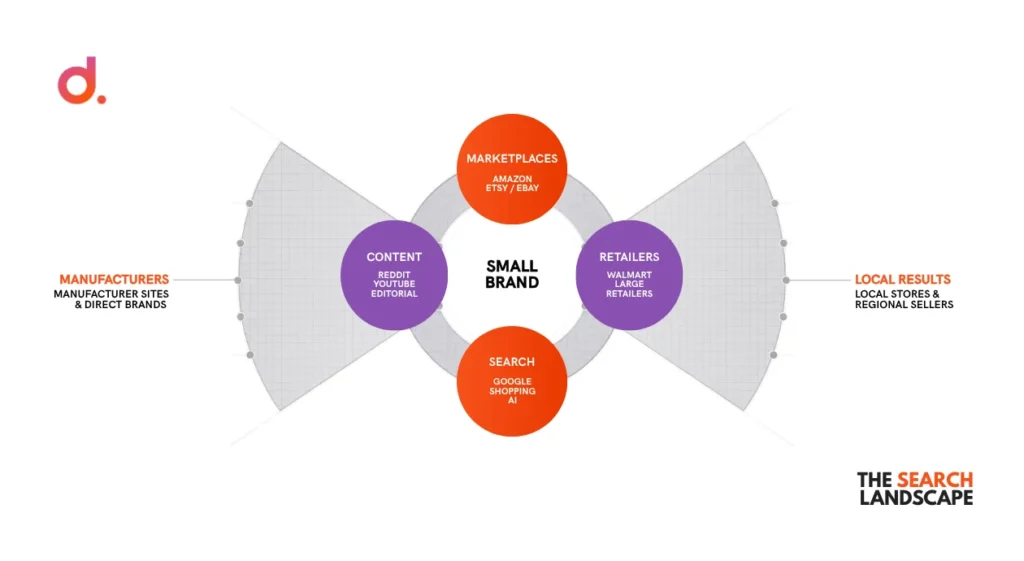
An ecommerce search result is crowded in ways a normal service-business result is not.
Depending on the query, you may compete with:
- Amazon.
- Walmart.
- Large category retailers.
- Manufacturer sites.
- Google Shopping results.
- Reddit discussions.
- Review publishers.
- YouTube videos.
- AI Overviews
- Marketplaces such as Etsy or eBay.
- Big editorial sites.
- Local results.
That sounds discouraging until you look at what those pages are actually good at.
A marketplace is great at selection and convenience.
It may be weak at explaining a niche buying decision.
A giant retailer may rank for the category but have thin product copy, weak comparisons, or poor educational content.
A Reddit thread can rank because it contains honest first-hand language, but it may be disorganized or outdated.
A small brand can win when it has a narrower point of view and better category expertise.
This is one reason Digital Shaping’s ecommerce SEO work combines search visibility with site structure, product/category intent, technical health, and conversion. Ranking the wrong page for the wrong query is not a business win.
When SEO Is Worth It: A Fit Test
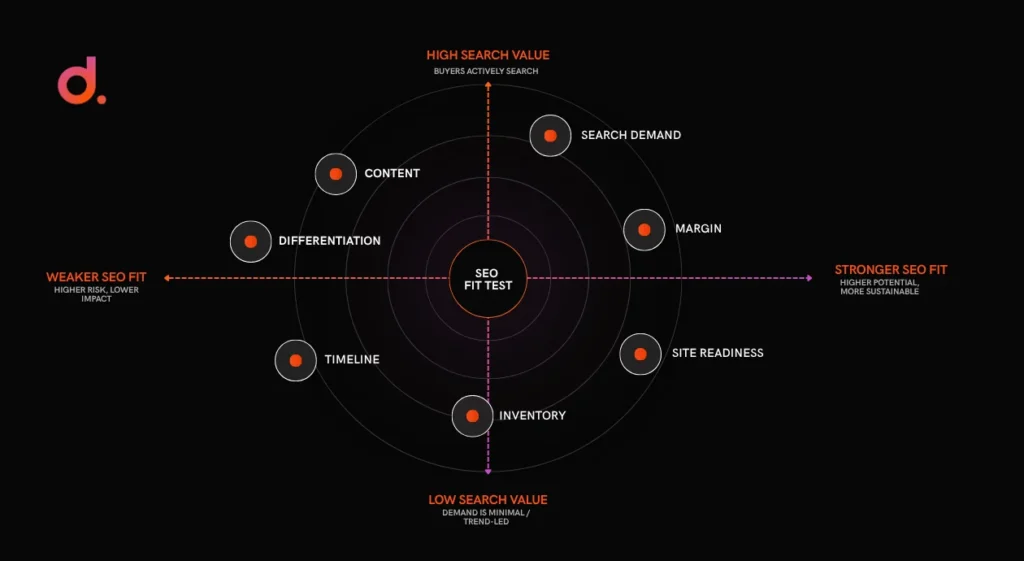
| Factor | Stronger SEO Fit | Weaker SEO Fit |
| Search demand | Buyers search category, problem, use case, comparisons | Demand is mostly social/trend-led and search volume is minimal |
| Margin | Enough gross/contribution margin to fund acquisition | Thin margin and heavy return/shipping cost |
| Marketplace overlap | Product has expertise, brand, bundle, formulation, or service differentiation | Same SKU is widely available from larger sellers |
| Timeline | Can invest for 6–12 months | Needs immediate revenue |
| Site readiness | Fast, crawlable, conversion-ready | Broken mobile UX, weak product pages, poor checkout |
| Inventory | Stable categories/products | Constantly discontinued or replaced pages |
| Content advantage | Real expertise, original data, useful comparisons | Only manufacturer copy and generic AI summaries |
One weak factor does not kill the strategy.
A pattern of weak factors should change the priority.
The Real Cost of Ecommerce SEO
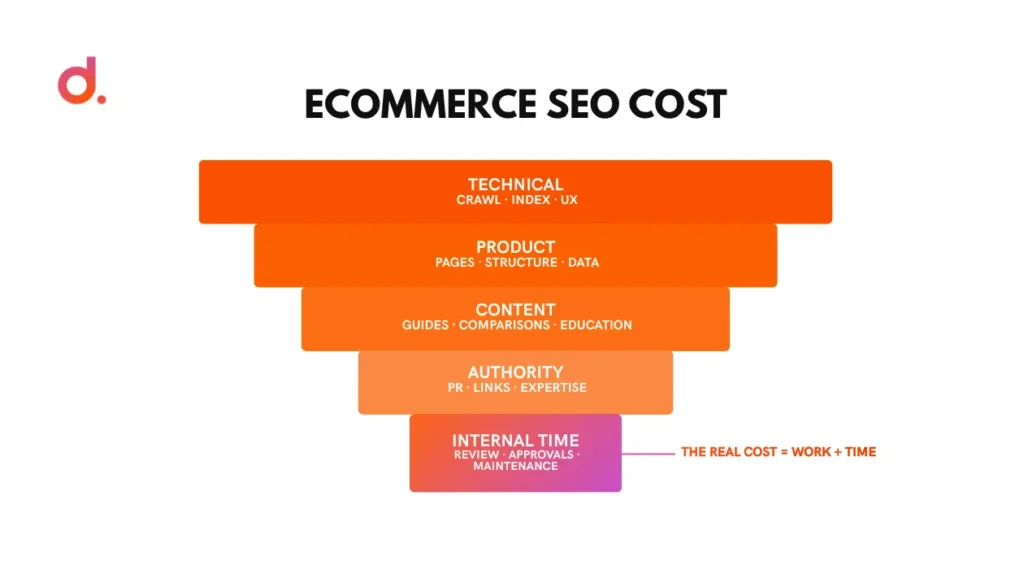
There is no honest universal monthly price because scope changes enormously.
Instead of asking, “What does SEO cost?” break the work into cost buckets.
Technical Foundation
This can include:
- Crawl/indexing review.
- Canonicalization.
- Duplicate URL control.
- Faceted navigation.
- Pagination.
- XML sitemaps.
- Structured data.
- Core performance issues.
- Mobile UX.
- Redirects and broken links.
A Shopify store with 300 products and a clean theme is different from a custom store with 80,000 variants and years of index bloat.
Category and Product Optimization
This includes:
- Keyword/query mapping.
- Category structure.
- Product titles and descriptions.
- Internal links.
- Filters.
- Merchant data.
- Image optimization.
- Product schema and availability data.
Google’s ecommerce SEO documentation specifically emphasizes product data, site structure, and helping Google discover and understand ecommerce content.
Content
Useful ecommerce content might include:
- Buying guides.
- Comparisons.
- Product-selection help.
- Use-case pages.
- Care guides.
- Sizing or compatibility resources.
- Ingredient/material education.
- Original tests.
- Customer questions.
Google’s people-first content guidance is blunt about the direction: create original, substantial content for people, not pages designed mainly to manipulate rankings.
There is also no magic word count. A 600-word product guide that answers the question properly can be more useful than 2,500 words of padded SEO copy.
Authority and Distribution
Some categories need backlinks and third-party authority to compete.
That can come through digital PR, original research, partnerships, expert commentary, product reviews, community participation, or resources people genuinely reference.
Buying low-quality links because a spreadsheet says “DR 50” is not a sustainable strategy.
Internal Time
Someone has to provide product expertise, approve changes, answer technical questions, and maintain the work.
Count that cost too.
The Break-Even Math
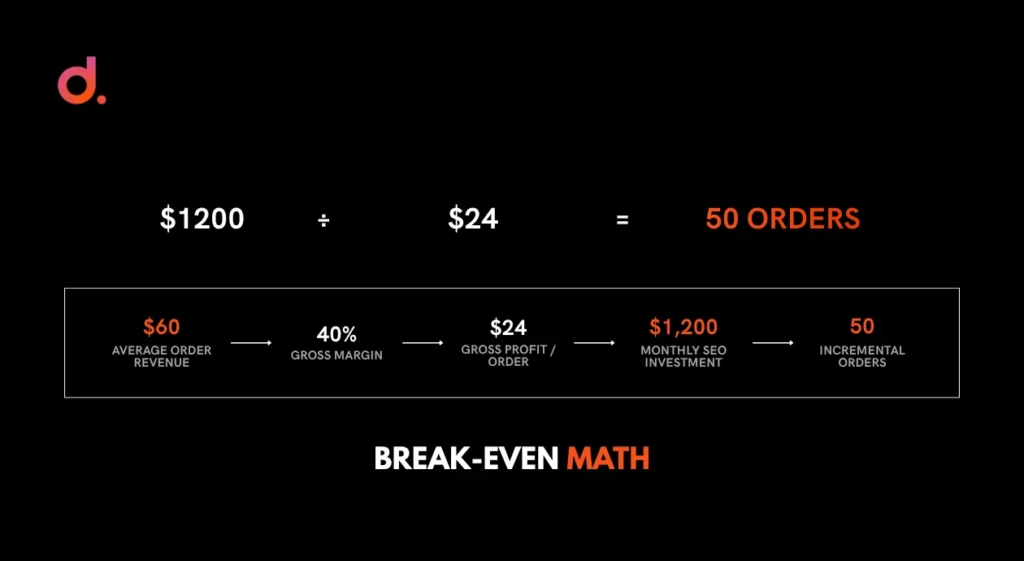
You can run a simple break-even check before committing.
Suppose:
- Average order value = $60.
- Gross margin = 40%.
- Gross profit per first order = $24.
- Monthly SEO investment = $1,200.
Ignoring repeat purchases and other variable costs for the moment:
$1,200 ÷ $24 = 50 incremental orders
You need roughly 50 additional first orders per month for that month’s SEO cost to break even on first-order gross profit.
The example is illustrative. Your numbers may be completely different.
Now add reality.
If 25% of customers repeat and repeat orders have strong margins, SEO can afford a higher first-order CAC.
If return rate is high, shipping is heavily subsidized, or discounts are common, the break-even number rises.
If SEO work continues generating organic sales after the initial investment period, the cumulative economics improve.
This is why “organic traffic is free” is a useless business statement.
Calculate organic acquisition economics like any other channel.
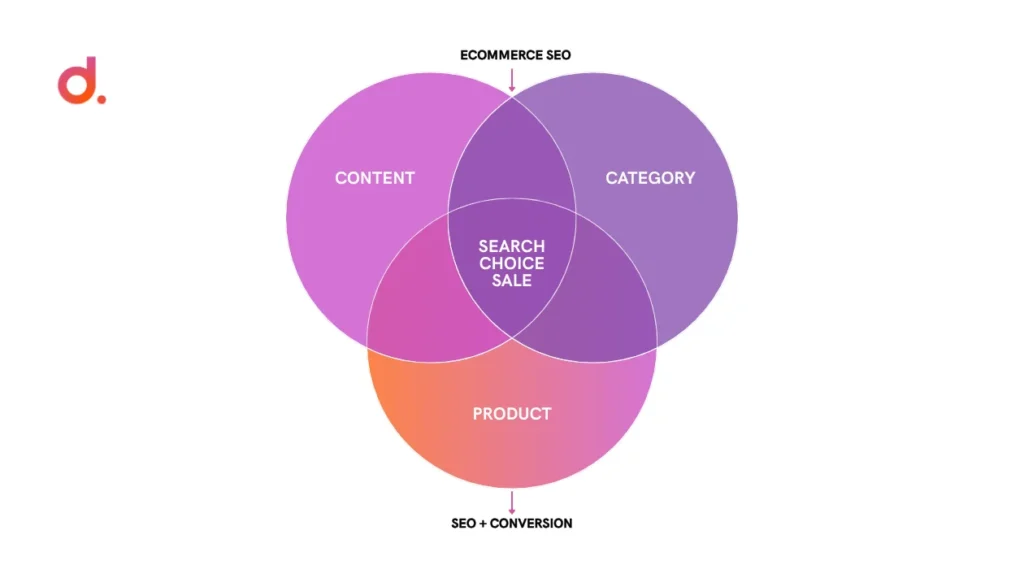
What Actually Works for a Small Ecommerce Store
Product Pages: Win the Specific Purchase
A product page should be more useful than the copy every reseller got from the manufacturer.
Answer real buying questions:
- Who is this for?
- What problem does it solve?
- What is the material/formulation/specification?
- What are the dimensions?
- How does sizing work?
- What is compatible with it?
- What comes in the box?
- How long does delivery take?
- What is the return policy?
- How is it different from the closest alternative?
Google can only rank what it can understand, but the customer has to choose what you sell.
SEO and conversion belong on the same page.
Category Pages: Own the Commercial Topic
For many stores, category pages are the strongest SEO asset.
Someone searching “women’s trail running shoes” or “vitamin C serum for dark spots” is not looking for one generic blog post. They are looking to compare options.
A strong category page combines:
- Clear product selection.
- Useful filters.
- Short category guidance.
- Internal links to subcategories.
- Buying criteria.
- Relevant FAQs.
- Unique title/meta copy.
Google’s site-structure guidance for ecommerce recommends clear links from menus to categories, subcategories, and products so important items are reachable through normal navigation.
If Google cannot reach a product through your link structure, do not expect a sitemap alone to carry the strategy.
Content: Answer the Questions That Sit Before the Product
Good ecommerce content does not exist to hit a publishing quota.
It exists because buyers have questions that product/category pages cannot answer cleanly.
Examples:
- “Merino wool vs synthetic base layer.”
- “How often should I replace a running shoe?”
- “Can niacinamide and vitamin C be used together?”
- “Which espresso grinder size do I need?”
The article should lead naturally to the category or product that solves the next problem.
If the content gets traffic but no assisted product interest, investigate the intent before celebrating pageviews.
SEO vs Paid Ads vs Marketplaces
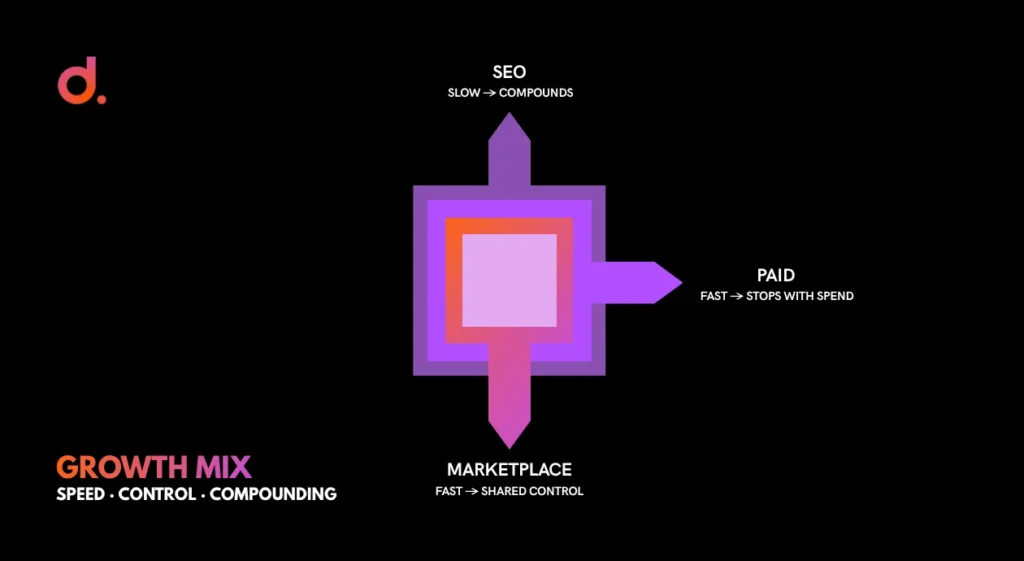
| Channel | Speed | Compounding value | Control | Main trade-off |
| SEO | Slow | High if rankings/content persist | High on your site | Requires patience and ongoing work |
| Paid search/social | Fast | Low when spend stops | High targeting/control, platform-dependent | You pay for continued reach |
| Marketplaces | Fast access to demand | Marketplace owns much of the relationship | Lower | Fees, competition, weaker customer ownership |
These are not mutually exclusive.
Paid search can reveal which queries convert before you invest heavily in SEO.
Marketplaces can validate demand.
SEO can reduce the long-term dependence on buying every visit.
The best mix depends on cash flow and category economics.
When Paid Search Should Come First
If you have a new product and need to know whether the offer converts, paid search can provide faster feedback.
You can learn:
- Which queries produce clicks.
- Which products get interest.
- What conversion rate looks like.
- Whether the economics work at current CPCs.
If paid traffic cannot convert because the price, page, trust, or checkout is weak, SEO traffic will not magically solve the business.
Fix the store first.
When SEO Should Get the Budget
SEO deserves priority when you can see a durable demand pattern and the business is paying repeatedly to access it.
If thousands of category searches happen every month and paid ads are the only way you appear, organic visibility can become an owned acquisition asset.
The important word is asset.
A useful category page can keep working while individual ads turn on and off.
That is why SEO can become more efficient over a long window even though the first months look expensive.
Separate Branded Demand From Non-Brand Growth
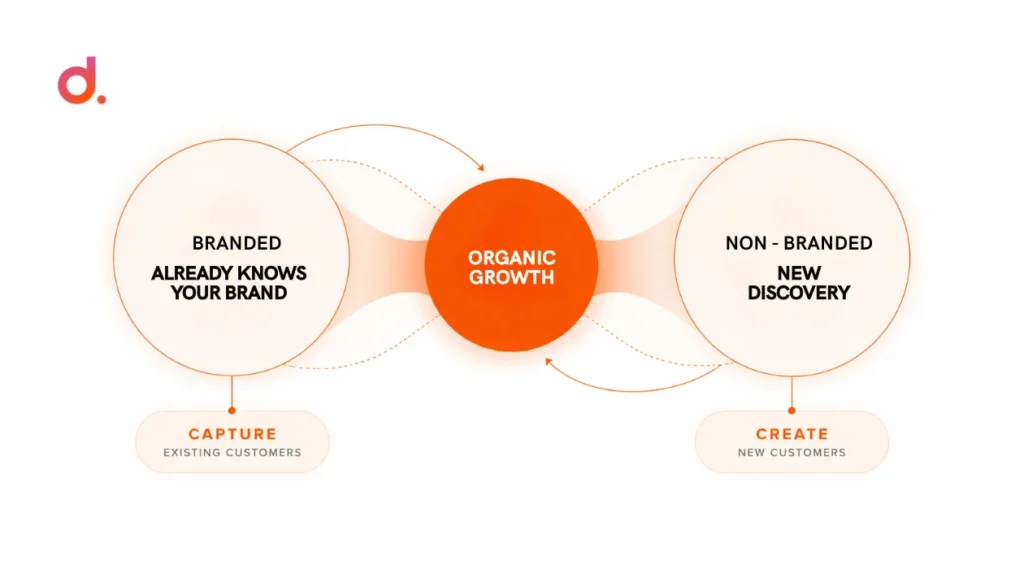
A small store can think SEO is working when customers are mostly searching for the brand name they already learned somewhere else.
Branded organic traffic is useful, but it answers a different question from non-brand search. If someone types your company name and clicks the first result, SEO helped capture existing demand. If someone searches for a product problem, comparison, category, ingredient, material, or use case and discovers you for the first time, organic search helped create a new acquisition path.
Track the two separately where your reporting allows it.
For a small ecommerce brand evaluating SEO ROI, the stronger signs are not simply “organic sessions increased.” Look for growth in non-brand queries, category and product-page entrances, assisted conversions from informational content, and organic orders from customers who were not already navigating to the brand.
This distinction also prevents another bad budget decision: taking credit away from paid social, creators, PR, or marketplaces that may have created branded demand simply because Google captured the final branded search.
SEO can be valuable as both demand capture and demand creation. Just do not use one to prove the other.
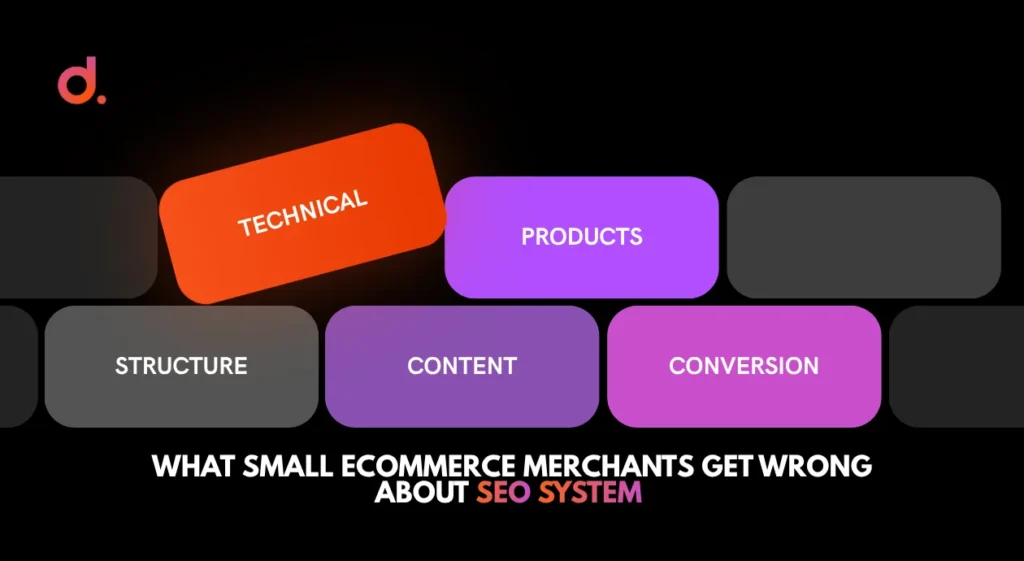
What Small Ecommerce Merchants Get Wrong About SEO
The most common mistake is treating SEO as a content-writing service.
A store orders four articles a month and waits for rankings.
Meanwhile:
- Category pages are thin.
- Products are buried behind filters.
- Search engines crawl thousands of duplicate parameter URLs.
- Internal links are weak.
- Product data is incomplete.
- Important items go out of stock and disappear.
- Mobile conversion is poor.
No number of “Top 10 Summer Trends” articles fixes that system.
The second mistake is copying competitors.
If the top three ranking pages all say the same thing, producing a fourth version with the same headings rarely creates a reason for Google or a buyer to prefer you.
Bring something from the business itself: product tests, original photos, expert selection criteria, customer patterns, comparisons, sizing data, or a point of view earned by actually selling the category.
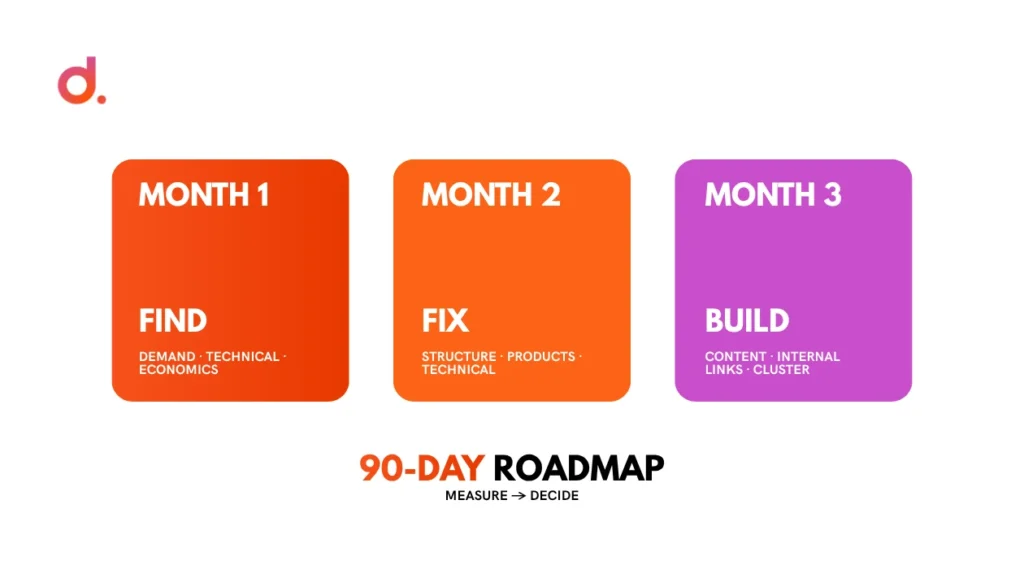
A 90-Day Decision Plan Before You Commit for a Year
You do not have to sign an emotional contract with SEO.
Use the first 90 days to validate the foundation.
Month 1: Find the Opportunity
- Map category and product demand.
- Identify the queries with commercial relevance.
- Audit crawl/indexing.
- Review competitors and marketplaces.
- Calculate break-even acquisition economics.
Month 2: Fix the Store’s Search Foundation
- Clean important technical issues.
- Improve category architecture.
- Optimize high-priority product/category pages.
- Strengthen internal linking.
- Improve product data and schema where appropriate.
Month 3: Build One Content Cluster Around Real Buying Questions
Do not publish ten unrelated posts.
Choose one category and build useful supporting content around it. Link everything to the relevant products and category page.
Then watch:
- Search impressions.
- Non-brand clicks.
- Category/product organic sessions.
- Assisted add-to-carts.
- New customers from organic.
- Revenue and margin.
You are not expecting SEO to “finish” in 90 days.
You are looking for evidence that the strategy is pointed at real demand.
Frequently Asked Questions
Is SEO worth it for a small business?
It can be, especially when customers actively search for the category and the business can invest long enough for rankings to compound. For a small ecommerce brand, check search demand, margins, site readiness, product differentiation, and timeline first. SEO is a poor short-term rescue strategy for a store that needs immediate cash.
How long does ecommerce SEO take to work?
There is no guaranteed timeline. Technical fixes can affect crawling quickly, while competitive category rankings can take many months. A six-to-twelve-month planning horizon is more realistic than expecting meaningful commercial results in a few weeks. Existing authority, competition, content quality, inventory stability, and implementation speed all change the timeline.
Is SEO better than paid ads for ecommerce?
They solve different problems. Paid ads can create traffic and testing data immediately, but the traffic generally stops when spend stops. SEO is slower and requires ongoing work, but strong category and product visibility can compound. Many small brands should use paid media for fast learning while building organic visibility for durable demand.
How much should a small ecommerce brand spend on SEO?
There is no universal amount. Budget should reflect technical complexity, category competition, content needs, authority gaps, and the store’s break-even customer economics. Start by calculating how many incremental profitable customers the monthly investment needs to generate. If that target is unrealistic for the available search demand, do not force the channel.
What should an ecommerce brand optimize first?
Start with the pages closest to revenue: high-demand categories, high-value products, and technical issues that prevent crawling or conversion. Then build content around real pre-purchase questions. Do not begin with a large blog calendar while product pages, site structure, mobile experience, or checkout are still weak.
One More Check: Can the Store Convert the Traffic?
SEO cannot rescue a store that makes buying unnecessarily difficult. Before increasing search investment, test the pages organic visitors will actually land on. Check mobile speed, product information, delivery clarity, variant selection, returns, trust signals, and checkout.
If product pages receive qualified traffic but add-to-cart and purchase rates are weak, fix the conversion problem alongside the search problem. Otherwise, SEO may succeed at bringing more potential customers into a journey that still loses them.
More organic traffic is useful only when the store can turn enough of it into profitable orders.
SEO Is a Business Bet, Not a Faith Test
You do not need to believe in SEO.
You need to run the economics.
Is there search demand? Can your brand provide a better answer or product experience than what already ranks? Is the category valuable enough? Can the site convert? Can you wait for the asset to build?
If yes, SEO can be one of the few acquisition channels that gets more useful as the work accumulates.
If no, forcing a 12-month content retainer because “every business needs SEO” is a bad decision.
Digital Shaping’s broader SEO, AEO, and AI Search work starts with the market and the gaps, not a fixed publishing package. The point is to find whether search can move revenue for the business, then build what the opportunity actually requires.
For a small ecommerce brand, that is the standard.
Not rankings for their own sake.
Profitable demand you do not have to rent forever.