
How to Get Your Brand Mentioned by ChatGPT and Perplexity

To increase the chance that ChatGPT or Perplexity mentions your brand, make your business easy to identify, easy to crawl, and easy to cite. Build durable authority across your own site and trustworthy third-party sources, then publish current, question-ready pages that live-search systems can retrieve when a user asks for recommendations or comparisons.
There are two very different goals hiding inside the sentence, “I want ChatGPT to mention my brand.”
One is long-term reputation.
The other is live retrieval.
Most AI-search advice throws both into one bucket and tells you to add schema, publish FAQs, get backlinks, create an llms.txt file, and wait for the robots to notice you.
That is not a strategy. It is a pile of tactics.
Start by understanding which game you are actually playing.
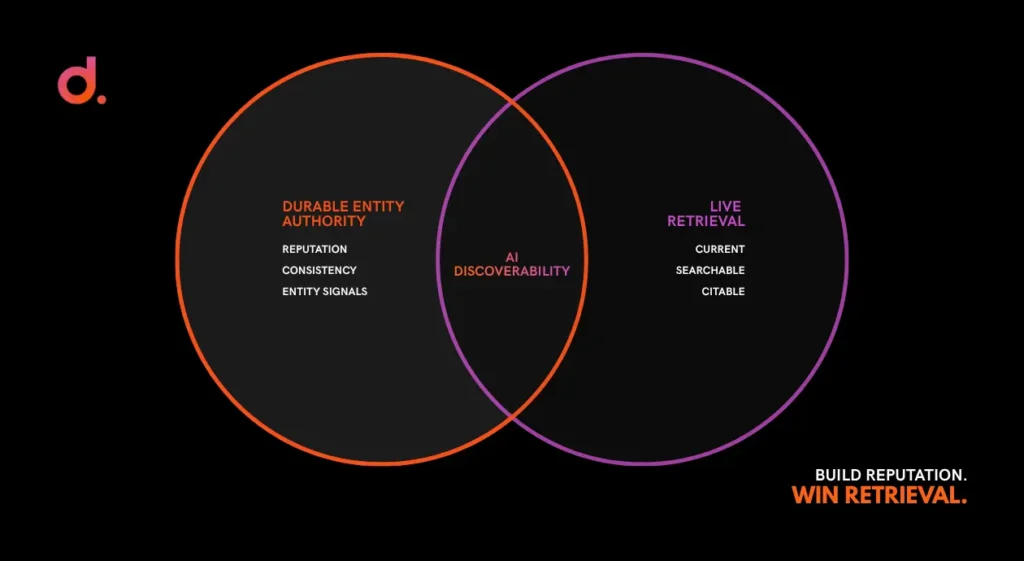
Two Different Games: Durable Brand Knowledge and Live Retrieval
An AI system can know about a company through the broader information it has learned or been given, and it can also retrieve current web sources at answer time.
Those are not the same mechanism.
Game 1: Durable Entity Authority
This is the slower game.
Your brand appears consistently across:
- Your own website.
- Reputable publications.
- Industry directories.
- Review sites.
- Expert roundups.
- Partner sites.
- Structured business profiles.
- Public datasets where appropriate.
- Community discussions.
Over time, the web develops a clearer picture of who you are, what category you belong to, what you sell, and what other entities are connected to you.
You cannot force a model to “memorize” your brand on demand. You can make the public evidence around the brand less ambiguous.
Game 2: Live Retrieval
This is the faster game.
When a user asks a current question, AI search products can search or retrieve pages from the web and cite sources in the answer.
OpenAI’s current publisher guidance says any public website can appear in ChatGPT search and specifically tells publishers not to block OAI-SearchBot if they want content discoverable for summaries, citations, and links.
Perplexity describes itself as an answer engine that searches the web in real time and cites original sources.
That means a page you publish this week can potentially matter to a live answer this week, even though you have no control over whether it is selected.
The practical strategy is different for each game.
For durable authority, build consistent reputation.
For live retrieval, build citable pages around questions people are asking now.
You need both.
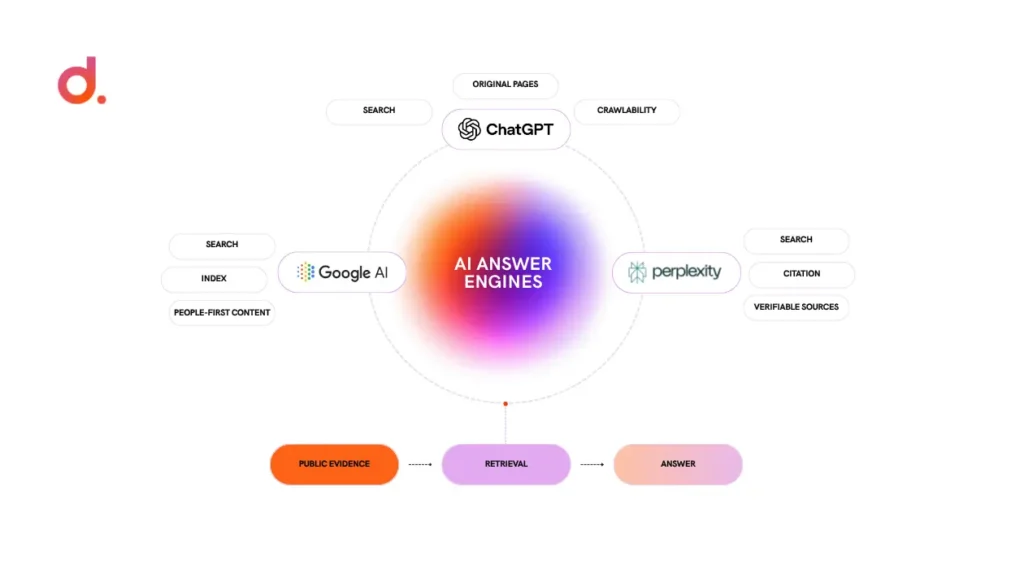
How ChatGPT and Perplexity Decide What to Cite
Nobody outside the platform has a complete ranking formula. Be suspicious of anyone who claims otherwise.
But the platforms do publish enough to make some useful decisions.
| Platform | What we can verify publicly | What that means for a brand |
| ChatGPT Search | Can search the web and cite current sources; public sites can appear; OAI-SearchBot access helps content be discoverable | Crawlability and useful original pages matter. There is no “submit my brand for recommendation” button. |
| Perplexity | Searches current web sources and provides citations; emphasizes reputable and verifiable sources | Publish material worth citing and earn coverage on sources the system already trusts for the topic. |
| Google AI features | Built on Google Search systems and normal index/snippet eligibility | Traditional technical SEO and people-first content still matter. Special “AI-only SEO” files are not required. |
ChatGPT’s own web-search help also reminds users that citations can be incomplete or incorrect and encourages checking original sources.
That is useful context for marketers.
AI answer engines are not static directories. They are retrieval and synthesis systems. The source set can change by query wording, location, freshness, product mode, model, and time.
So do not ask, “What single page do I need to rank?”
Ask, “What public evidence would make us a credible source or candidate for this exact question?”
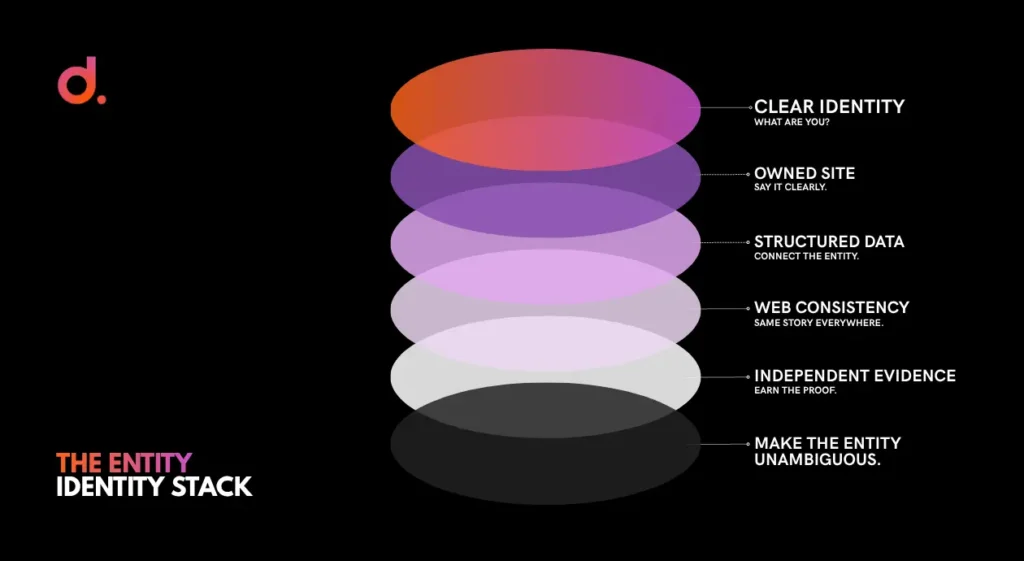
Win the Durable Authority Game First
If the web cannot tell whether your company is a software platform, an agency, a local clinic, or a blog, AI systems have the same ambiguity problem search engines do.
Make the Entity Unambiguous on Your Own Site
Your homepage and About page should answer basic identity questions without forcing interpretation:
- What is the company called?
- What does it do?
- Who is it for?
- Where does it operate?
- What products/services are offered?
- Who founded or leads it, where relevant?
- What evidence supports its expertise?
- How can the claims be independently verified?
That sounds basic.
Many sites replace those answers with language such as “transforming possibility through innovative experiences.”
A human has trouble explaining what that company does.
An answer engine will too.
Use Organization Schema to Reinforce, Not Invent, Identity
Schema.org’s Organization vocabulary can help machines connect a company name with its URL, logo, contact information, and related profiles.
Use structured data to represent information that is already visible and true on the page.
Do not use schema as a place to stuff claims the user cannot see.
For example, sameAs can connect official profiles or authoritative entity pages. It is not a loophole for attaching the brand to unrelated high-authority sites.
Build Consistency Across Third-Party Sources
If your brand name, category, location, founder, and service descriptions conflict across the web, clean them up.
You want a researcher to reach the same basic conclusion whether they land on:
- Your website.
- LinkedIn.
- A trade association.
- A review platform.
- A partner page.
- A reputable interview.
Consistency is not glamorous. It reduces ambiguity.
Earn Mentions You Would Want a Customer to Read
The best third-party citation is not “a backlink.”
It is a page that adds independent evidence.
Examples:
- A respected trade publication reviewing your product.
- A customer case study on a partner’s site.
- A comparison from a credible specialist publisher.
- A university or professional association referencing your research.
- A podcast transcript in which a named expert explains your method.
- A community discussion where real customers describe using the product.
Do not create fake forum accounts to seed your brand name.
If your “AI visibility strategy” would embarrass you when shown to a customer, it is probably the wrong strategy.
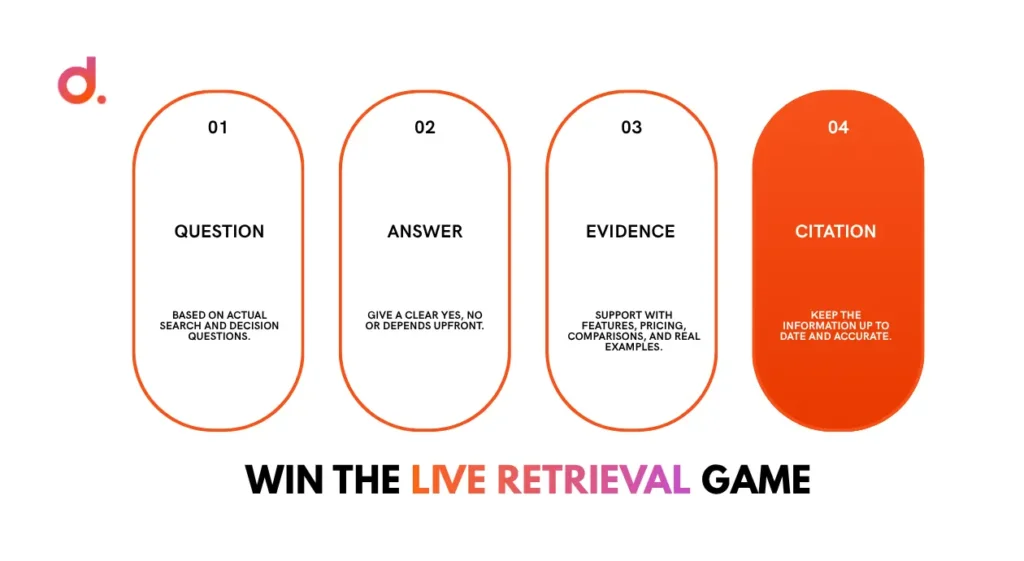
Win the Live Retrieval Game: Be Citable This Week
Live search rewards a slightly different skill: make the answer easy to retrieve and useful to quote.
Publish Pages Around Real Decision Questions
Brand pages alone are not enough.
If you want to appear when someone asks:
“What is the best payroll software for a 20-person restaurant?”
then your site needs relevant evidence for that decision.
That might include:
- A page explaining who the product is for.
- Transparent feature/limitation information.
- Pricing context.
- A comparison against realistic alternatives.
- Integration details.
- Implementation information.
- Support and onboarding specifics.
- First-party customer evidence.
The best answer-engine content often looks like excellent buyer education, because that is what it is.
Answer the Question Before Expanding It
If the heading asks, “Does this integrate with Shopify?”
The first sentence should answer yes/no/depends.
Do not make a retrieval system read 400 words to discover the answer.
A useful pattern is:
- Direct answer.
- Conditions or caveat.
- Supporting evidence.
- Practical next step.
That structure helps humans too.
Write Comparison Content That Admits Trade-Offs
“Brand X vs Brand Y” pages fail when they are written like a court case where the publisher’s own product magically wins every category.
Real buyers are choosing based on context.
Say who each option is better for. Mention limitations. Explain where price, implementation, feature depth, or support differ.
A page that is honest enough to be useful is more citable than one that reads like a disguised sales page.
Keep Important Pages Fresh
If your pricing, features, team, or category changes, update the pages AI systems may retrieve.
Perplexity explicitly positions its search around current web information. ChatGPT Search also uses current web sources when needed.
A 2023 “best tools” article with dead products and old pricing is a weak source in 2026.
Freshness is not “change the publish date every month.”
It means re-check the facts.
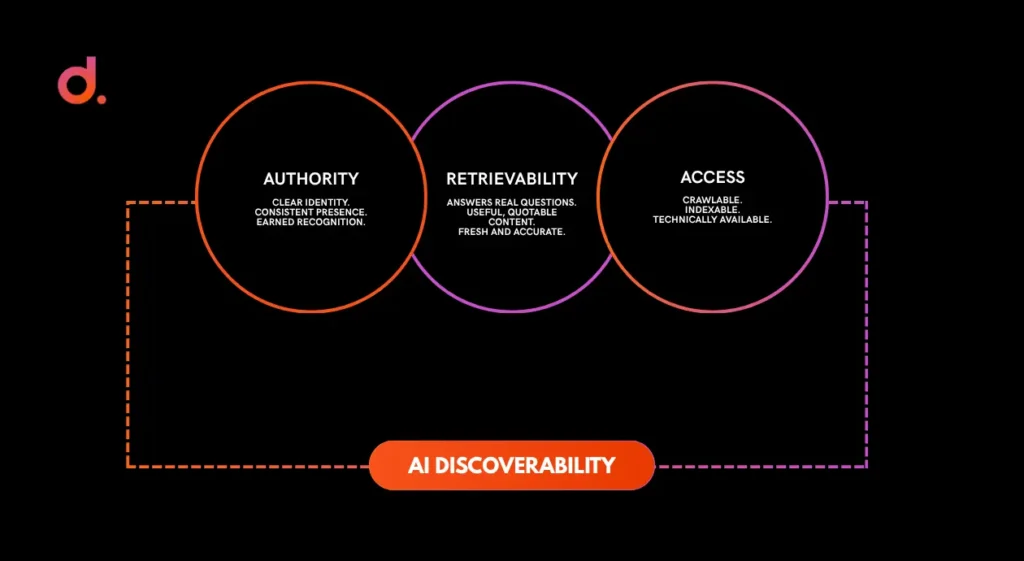
Crawlability: The Part You Can Verify
Before debating “GEO tactics,” make sure the systems can access the site.
ChatGPT
OpenAI says publishers who want content included in ChatGPT search summaries and citations should allow OAI-SearchBot in robots.txt.
That is direct platform guidance.
It is also separate from GPTBot, which OpenAI identifies for potential model-training collection. A publisher can make different choices about search discovery and training.
This distinction matters because “ChatGPT crawler” is not one single thing.
Perplexity
Perplexity’s current robots.txt guidance says PerplexityBot respects robots directives, while its help center also says the platform searches the live web and cites sources.
Check your CDN, firewall, bot-management tool, and robots rules. A security change can block a crawler without anyone on the marketing team realizing it.
Google’s current AI search optimization guidance says eligibility for AI features starts with the normal Search foundation: pages need to be indexed and eligible to appear with snippets. The page also explicitly says Google does not require special AI files such as llms.txt.
That is a useful sanity check for the whole category.
Do the normal technical work first.
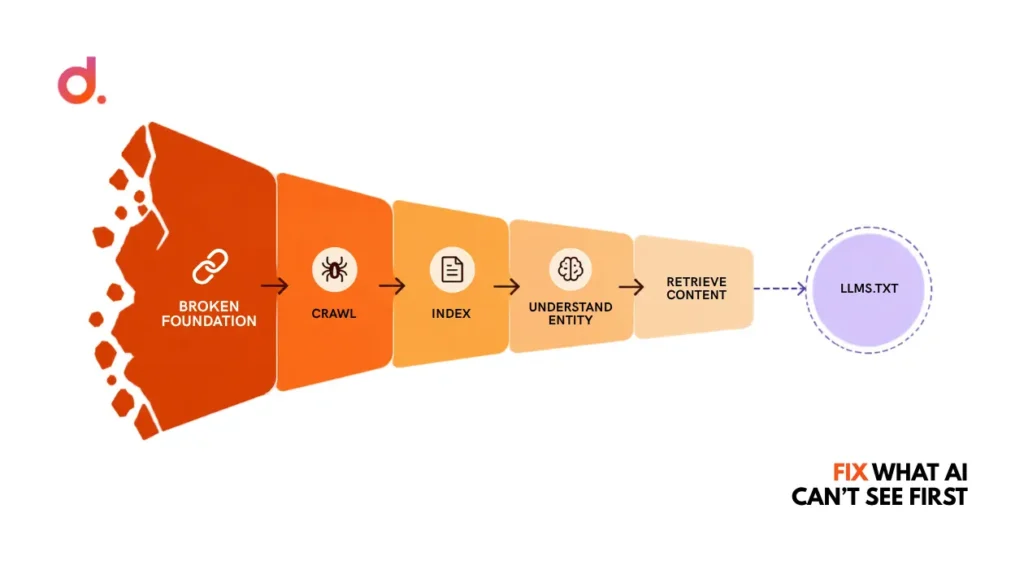
What About llms.txt?
Treat llms.txt as an optional emerging convention, not a ranking requirement.
Some tools, site owners, and AI products may experiment with it. That can make it useful operationally in certain stacks.
But Google explicitly says it does not use llms.txt for its AI search features, and current public ChatGPT/Perplexity guidance focuses on crawler access and normal web content rather than requiring an llms.txt file.
So if your site has broken canonical tags, blocked crawlers, thin category pages, and no clear company identity, do not spend the week polishing llms.txt.
That is solving the least important problem first.
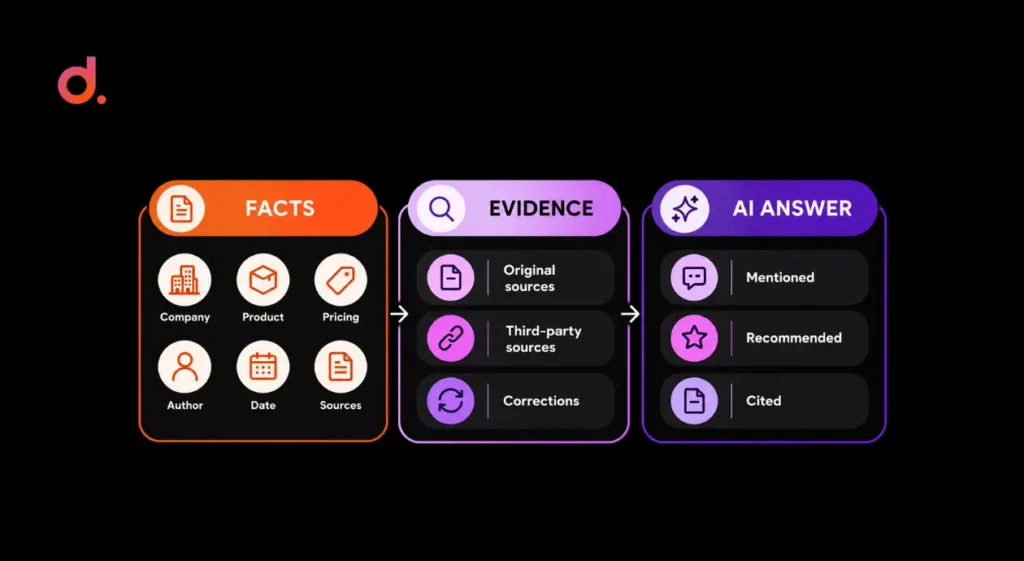
Make Facts Easy to Verify, Not Just Easy to Parse
Clear formatting helps retrieval, but a page also needs facts a system can verify against the rest of the web.
For important brand pages, keep the basics explicit and consistent:
- What the company does.
- Who the product or service is for.
- Where the company operates.
- Current product names and plan names.
- Current pricing or a clear explanation when pricing is custom.
- Named authors or experts where expertise matters.
- Publication and update dates on time-sensitive material.
- Original sources for statistics and claims.
- A clear correction path when information changes.
This is not about writing robot copy. It is about reducing ambiguity.
Perplexity’s current source-label guidance says its review process considers site-level signals such as whether a site corrects mistakes and identifies authors. That does not mean an author box is a magic ranking factor. It does show why basic editorial accountability matters when a search product is trying to present verifiable sources.
OpenAI’s publisher guidance makes a similarly practical point from another direction: a public page first has to be accessible to OAI-SearchBot if you want its content available for ChatGPT search summaries and citations.
Crawlability gets the page into consideration. Verifiable content gives the system something worth using.
Citation Is Not the Same as Recommendation
A brand can appear as a source without being the brand the answer recommends.
That distinction matters when you measure AI visibility.
If your article is cited in an answer about “how to choose payroll software” but competitors are the recommended products, you have source visibility, not category preference. If your product is named but the answer cites a third-party review, you have brand visibility without owning the evidence. If both the brand and its own original research are cited, that is a different position again.
Track those separately in your audit:
- Was the brand mentioned?
- Was the brand recommended?
- Was the brand’s own site cited?
- Which third-party sources shaped the answer?
- Was the information accurate and current?
A single “AI mentions” count hides all five.
Show Up in Sources AI Systems Already Use
You do not control the citation set, but you can study it.
Run the queries your customers ask and record which source types appear.
For example:
- “Best X for Y.”
- “X alternatives.”
- “X vs Y.”
- “What software should a [specific role] use for [specific task]?”
- “Which companies provide [service] in [market]?”
Then categorize the citations.
Do they come from:
- Brand sites?
- Review sites?
- Reddit?
- Trade publications?
- News outlets?
- YouTube?
- Academic sources?
- Government sources?
- Comparison publishers?
That tells you where credible visibility exists in your category.
Do not buy placements blindly because “AI cites Reddit.”
If the queries in your category cite industry research and technical documentation, Reddit spam is not your bottleneck.
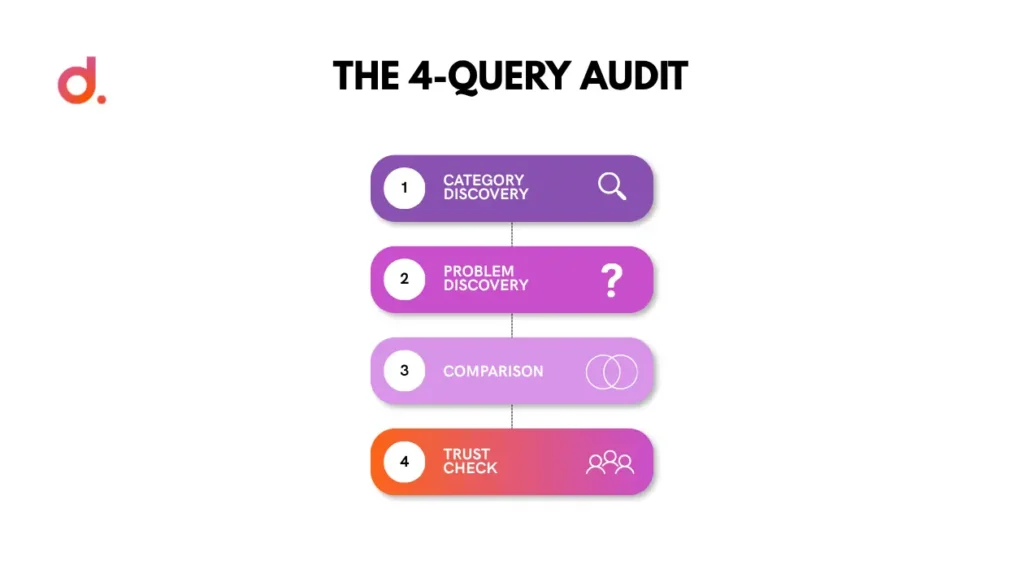
Run Your Own AI Brand Audit
You do not need enterprise software to see whether your brand exists in the answer space.
Run four types of queries in ChatGPT, Perplexity, and Google.
Query 1: Category Discovery
“What are the best [category] tools for [specific audience]?”
Does your brand appear at all?
If not, which brands do, and what sources support them?
Query 2: Problem Discovery
“What should I use to solve [problem your product addresses]?”
This is important because buyers may never search your category name.
Query 3: Comparison
“[Your brand] vs [competitor]. Which is better for [use case]?”
Look for factual errors and missing information.
If the answer says your product does not offer a feature you launched six months ago, what public page should make the feature undeniable?
Query 4: Trust Check
“Is [your brand] reputable?”
This reveals the public evidence layer: reviews, press, complaints, company information, expert mentions, and reputation sources.
Record:
- Whether you were mentioned.
- Position/order in the answer.
- Which sources were cited.
- Whether facts were correct.
- Whether the answer changed after a week/month.
Do not treat one prompt as a rank-tracking system. AI answers vary.
Look for patterns.
The Content Flooding Trap
The easiest AI-search strategy to sell is “publish 200 pages answering every possible long-tail question.”
That creates a lot of URLs.
It does not automatically create authority.
Google’s people-first guidance and its current AI-search documentation both push in the opposite direction: useful, original, non-commodity content that satisfies the user rather than mass-produced pages created to exploit a format.
The same logic applies beyond Google.
If your page says nothing a model cannot already synthesize from ten stronger sources, why should it cite you?
Bring something to the web:
- Original data.
- A tested process.
- Screenshots from your product.
- Named expert analysis.
- Real pricing.
- A useful calculator.
- A decision framework.
- A benchmark with methodology.
- A case study with specific context.
- A comparison based on actual use.
Being “AI-readable” is easy.
Being worth retrieving is harder.
What Not to Do
Do Not Manufacture Mentions
Fake Reddit conversations, low-quality guest posts, fake reviews, and coordinated “brand seeding” can create short-term mentions while damaging trust.
Google’s current AI guidance explicitly warns against inauthentic third-party mentions. Even when another platform’s ranking systems differ, the business risk is the same.
Do Not Create a Page for Every Prompt Variation
“Best CRM for dentists,” “top CRM for dentists,” and “what CRM should dentists use?” do not automatically need three separate pages.
Build one excellent resource around the underlying intent.
Do Not Add Schema That Contradicts the Page
Structured data should describe visible content, not serve as a hidden pitch to machines.
Do Not Measure Only Mentions
A brand can appear in an AI answer that nobody in your target market asks.
Track referral traffic, assisted conversions, brand search, qualified leads, and the commercial value of the queries where visibility changes.
How Digital Shaping Approaches AI Search Visibility
AI search is not a separate website living next door to SEO.
The foundations overlap: crawlability, clear entities, useful content, internal structure, authority, and measurable buyer intent.
Our SEO, AEO and AI Search services start by mapping what buyers ask across Google and AI platforms, then identifying the gaps between the brand’s current web presence and the sources those systems can actually understand and retrieve.
Sometimes the fix is technical.
Sometimes the product page is too vague.
Sometimes the brand has strong expertise but no third-party evidence.
Sometimes the site is publishing plenty and answering the wrong questions.
Diagnosis comes before “GEO content volume.”
Frequently Asked Questions
How do I get my brand mentioned by ChatGPT?
Make the brand easy to identify and the site easy to retrieve. Publish accurate, useful pages around real buyer questions, earn credible third-party coverage, and make sure OAI-SearchBot is not blocked if you want pages discoverable for ChatGPT search. There is no guaranteed submission or ranking tactic that forces a recommendation.
Can any website appear in ChatGPT search?
OpenAI’s current publisher FAQ says any public website can appear in ChatGPT search. It recommends allowing OAI-SearchBot so content can be discovered and surfaced in summaries and citations. Inclusion is not guaranteed, and the sources used can vary by query and current web results.
How do I get cited by Perplexity?
Perplexity searches current web sources and includes citations. Improve your chances by keeping pages crawlable, publishing clear and current answers, strengthening third-party authority, and creating original material that is useful enough to cite. Study the sources Perplexity already uses for your target queries instead of assuming one universal ranking formula.
Is llms.txt required for AI search optimization?
No. It is an emerging convention, not a universal requirement. Google explicitly says it does not use llms.txt for its AI search features. Current OpenAI and Perplexity publisher guidance focuses more directly on crawler access and normal web content. Fix crawlability, content quality, entity clarity, and authority first.
Is AI search optimization different from SEO?
It has different interfaces and citation behavior, but the foundations overlap heavily. Search systems still need accessible pages, clear information, useful content, and credible sources. AI search adds a stronger emphasis on answer-ready passages, entity understanding, third-party evidence, and visibility across the source ecosystem, not only rankings on your own domain.
Stop Trying to “Hack the Model”
Your brand does not need another AI trick.
It needs better evidence.
Evidence that the company exists and does what it says. Evidence on your own site. Evidence from customers and credible third parties. Evidence written in language that answers the buyer’s actual question. Evidence that is current enough to retrieve when the question is current.
Then make sure the crawlers can reach it.
Run the four-query audit. Save the citations. Compare them with the public information you control. Find the missing evidence.
That is a much more durable plan than publishing 100 thin FAQ pages and hoping a chatbot notices.
The goal is not to make an AI say your name once.
It is to become the kind of source and brand that belongs in the answer.