- Home
- Small Business Lead Generation: The Complete Guide to Channels, Costs & Results in 2026
Small Business Lead Generation: The Complete Guide to Channels, Costs & Results in 2026
The Complete Guide to Channels, Costs & Results in 2026
Small business lead generation is the set of activities that turn strangers into people who have raised a hand for your business: a form fill, a booked call, a referral introduction. Most small businesses do not have a lead generation problem. They have a system problem, bursts of effort followed by silence. This guide covers the channels that work, what each costs, and how to build a system instead of starting over.
What Small Business Lead Generation Actually Means
Two ideas get treated as one. They are not the same. Separating them changes how you plan.
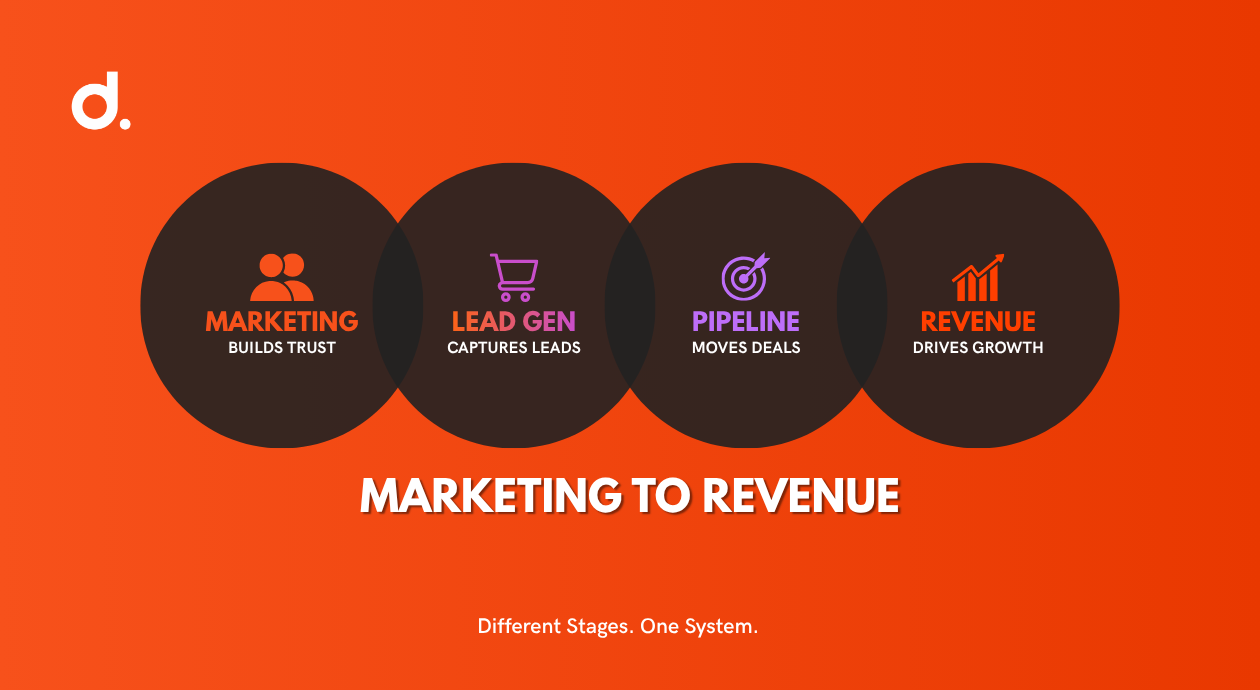
Marketing vs. Lead Generation
- Marketing: your brand, voice, and visual identity. It shapes how people feel about you.
- Lead generation: the operational subset, measured monthly and tied to revenue.
- A business can have great marketing and weak lead generation, or the reverse.
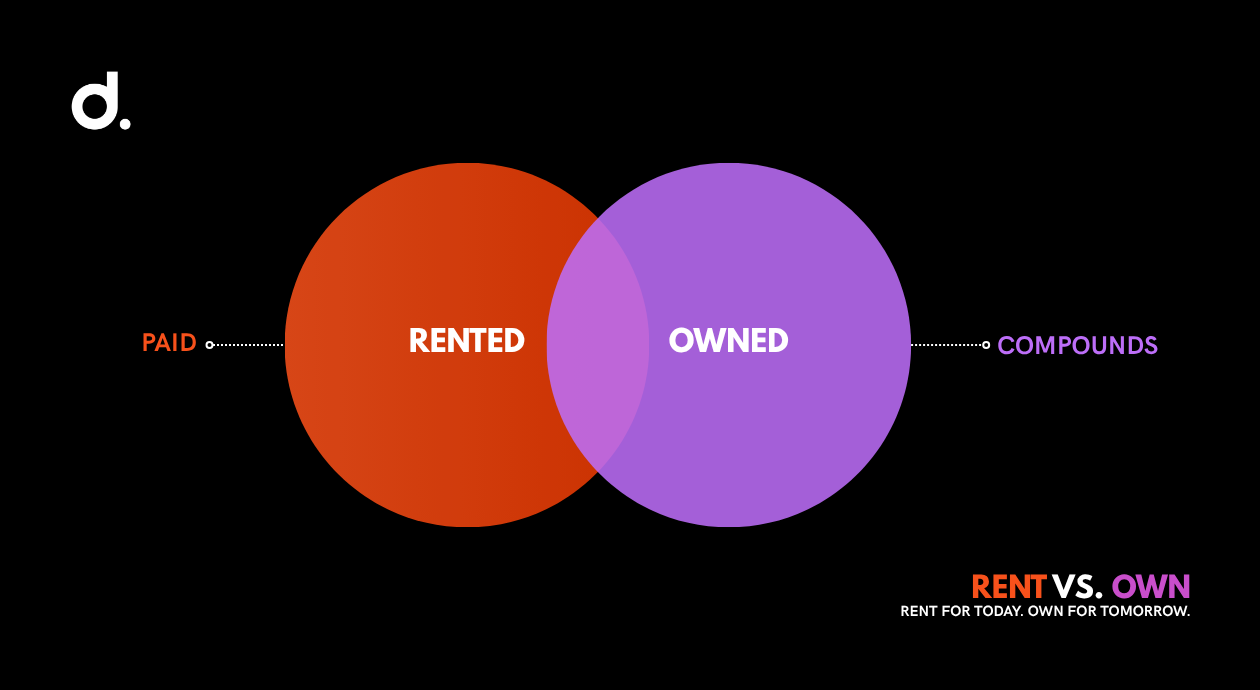
The Rent vs. Own Framework
Every channel falls into one of two buckets. Knowing which one changes your budget and your patience.
Rented channels
- Paid ads, agencies, purchased contact lists
- Produce leads only while you keep paying
- Stop paying and the pipeline goes quiet within days
Owned channels
- SEO content, email list, referral network, personal brand
- Keep producing even after you pause
- Compound over time instead of resetting to zero
Most healthy lead engines blend both. Rented channels buy speed. Owned channels build the asset that lowers cost per lead over time. This is not a marketing buzzword. It reflects how owners already talk about the problem: an ad account is something you rent, a website or referral network is something you own.
The Channels That Actually Work for Small Business
Nearly every small business uses the same four to five channels. What differs is how deliberately they combine them.
| Channel | Rent or Own | Speed to First Lead | Best For |
|---|---|---|---|
| Inbound (SEO + content) | Own | 3 to 6 months | Knowledge led services, evergreen buyer questions |
| Referral & partnerships | Own | 1 to 3 months | High trust, high ticket services |
| Outbound (cold email + LinkedIn) | Rent the activity; own the relationships | 2 to 4 weeks | B2B services with a clear ideal customer profile |
| Paid ads (Google + Meta) | Rent | 1 to 2 weeks | Local services, urgent buyer intent niches |
| Lead generation agency / vendor | Rent | 4 to 12 weeks onboarding | Businesses that need speed and lack in house time, not budget |
Inbound: SEO + Content
- What it is: pages and content that answer questions your buyers are already searching
- Two layers: commercial intent pages, plus supporting content for earlier stage questions
- Timeline: little to nothing for 2 to 3 months, per Google Search Central’s indexing guidance
- By month 6: traffic compounds and cost per lead keeps falling
- Works for local trades too, not just B2B: a window tint installer ranking locally captures buyers already searching
Outbound: Cold Email + LinkedIn
- Volume blasting no longer works: SPF, DKIM, and DMARC filter it out
- What works now: narrow, personalized outreach to a tight list from a clean sending domain
- Realistic reply rate: 3 to 8 percent, not the double digit numbers old playbooks promise
- LinkedIn: a short, specific message beats a generic connection request every time
- The list you build becomes an owned asset, even though the sending activity is rented
Paid: Google Ads + Meta Ads
- Google Ads intercepts demand: the buyer is already searching for what you sell
- Meta Ads creates demand: the buyer is scrolling, not searching
- Urgent, high intent local services usually perform better on Google
- Visually driven or lower intent offers often perform better on Meta
- Check official Google Ads and Meta Ads Manager documentation before launching either
Referral & Partnership Lead Generation
- Referred leads convert at meaningfully higher rates than any other channel
- Why: pre existing trust, known fit, lower price sensitivity
- Do not treat referrals as a passive lottery. Build a system:
- A structured post project ask, built into delivery, not left to chance
- A small, curated partnership network with complementary businesses
- A case study loop that fuels the next referral conversation
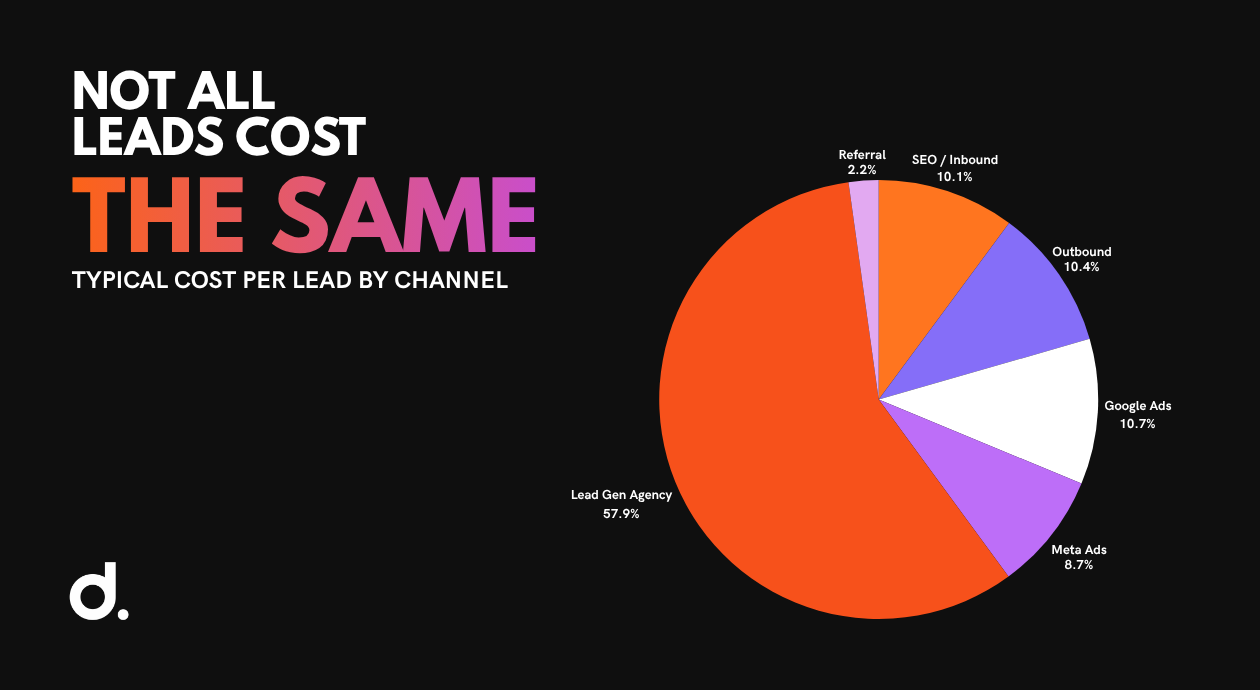
What Each Channel Actually Costs
Few resources give a clean, source anchored answer here. That is exactly why so many owners guess.
- First Page Sage’s 2026 benchmark data puts blended B2B cost per lead at roughly $237, split into about $310 paid and $164 organic
- Industry wide range: about $91 in e commerce to nearly $1,000 in higher education
- Treat any single blended number as a directional anchor, not a target for your business
| Channel | Typical Cost Per Lead | Notes |
|---|---|---|
| SEO / inbound content | $100 to $250 (amortized) | Cheapest once content matures; months to ramp |
| Referral | Roughly $25 to $50 | Cheapest channel overall; volume caps out naturally |
| Outbound (cold email/LinkedIn) | $80 to $280 | Depends heavily on list quality and data accuracy |
| Google Ads | $70 to $300+ | Wide range by vertical and keyword competition |
| Meta Ads | $100 to $200 | Lower buyer intent than search; varies by creative |
| Lead generation agency | $1,000+/month minimum; often $4,500 to $35,000+/month | Retainer includes labor, not just media spend |
Local and consumer service businesses typically land toward the lower end of each range.
Budget Stages
- Bootstrap, under $1,000/month: one owned channel plus a small, tightly targeted outbound list
- Starter, $1,000 to $3,000/month: add a modest paid budget on the channel matching how your buyer shops
- Growth, $3,000 to $8,000/month: run inbound, paid, and outbound together, with tight tracking
- Scale, $8,000/month and up: this is where a dedicated agency or in house hire starts to make sense
A Quick Worked Example
- $1,500/month on Google Ads at $120 CPL generates about 12 leads a month
- A referral system adds 4 to 6 more leads a month at near zero media cost
- Blended cost per lead across both channels drops well below the paid only number
Next action: pick two channels from the table above and give them 90 days before judging results.
Should You Do This Yourself or Hire a Lead Generation Company?
The question owners actually ask: should I just hire someone for this? Most “best of” lists are written by an agency ranking itself first. Here is a neutral way to decide.
The Pricing Models You'll Actually Be Offered
- Retainer: fixed monthly fee regardless of results. Predictable, but requires trust.
- Pay per appointment: you pay only for booked calls. Sounds safer, often costs more per unit.
- Commission only: paid only when you close. Can signal an agency that underinvests in onboarding.
Red Flags to Screen Out Before the First Call
- Guaranteed lead volumes with no mention of your ideal customer profile
- No named data source behind case studies or benchmarks
- Pressure to pay annually upfront on a monthly contract
- Case studies with no company names attached
- Refusal to provide references you can actually call
What to Ask Instead of "How Many Leads Will I Get"
- What is your typical cost per qualified opportunity, not just cost per lead
- What is the show up rate on the calls you book
- Can I speak with three current or recent clients directly
The Lead Generation Funnel: From Stranger to Customer
Every channel above feeds the same funnel. The math at each stage shows you where the system is leaking.
| Stage | What Happens | Realistic Range |
|---|---|---|
| Awareness | A stranger encounters you through an ad, search, post, or referral | — |
| Visit | They click through to your site or profile | 1 to 5% click through rate |
| Lead | A low friction action: form fill, call, or booking | 2 to 5% of visitors |
| Qualified conversation | You actually talk and confirm fit | 40 to 70% of leads |
| Customer | They sign and pay | 10 to 30% of qualified conversations |
The Follow Up Speed Problem
- The original Lead Response Management study (Dr. James Oldroyd, InsideSales.com data, 6 companies, 15,000+ leads):
- Odds of contacting a lead drop about 100x at 30 minutes versus 5 minutes
- Odds of qualifying that lead drop about 21x over the same window
Speed to first contact matters more than almost anything else you control. A slow follow up wastes money you already spent.
Nurture: What to Do With Leads Who Aren't Ready Yet
Most leads are not buying today. A simple cadence catches the ones who are just early:
- Immediate confirmation the moment they reach out
- A short value email within 24 hours, not a sales pitch
- A check in at the one week mark
- Ongoing monthly touches until they are ready or opt out
The most common, most preventable leak: one unanswered lead who simply moved on to a competitor.
Realistic Timeline: When Leads Actually Start Coming
- Week 1 to 2: foundation. Tracking is in place, channels chosen, first assets live.
- Week 2 to 4: fast channels produce first leads, usually paid ads and outbound.
- Month 2 to 3: channels stabilize. First SEO impressions and clicks appear.
- Month 6+: inbound and referrals compound. Blended cost per lead starts dropping.
Next action: build your tracking and choose two channels this week, rather than waiting for a perfect plan.
Common Lead Generation Mistakes Small Businesses Make
- Spreading thin across too many channels instead of two at full intensity
- Skipping conversion tracking, so there is no way to know what to double down on
- Slow follow up, the single most common and most fixable leak
- No nurture sequence beyond the first contact
- Quitting an owned channel right before it would have compounded
- Treating a rented channel as owned, then being surprised when the pipeline goes quiet
Most of these trace back to one root cause: treating lead generation as campaigns instead of a system.
Frequently Asked Questions
What is small business lead generation?
The set of activities that turn strangers into people who have raised a hand for your service: a form fill, a booked call, a referral. It combines inbound, outbound, paid, and referrals, measured monthly and tied to revenue.
How much does lead generation cost for a small business?
It varies by channel and industry. Paid channels cost more per lead than organic. Blended averages sit in the low to mid hundreds of dollars for B2B services. Check a current year, named report rather than a single quoted number.
How long does it take for lead generation to start working?
- Paid ads: first leads in 1 to 2 weeks
- Cold outreach: first calls in 2 to 4 weeks
- SEO and content: 3 to 6 months before it becomes a repeatable source
Should I hire a lead generation company or do it myself?
It depends on your time, budget, and how fast you need pipeline. Most “best lead generation company” lists are published by an agency ranking itself first. Evaluate any vendor on pricing model, references, and cost per qualified opportunity, not a ranked list.
What is the difference between lead generation and marketing?
Marketing is the broader category: brand, positioning, voice. Lead generation is the operational subset that produces conversations with buyers, measured monthly and tied to revenue. They are not interchangeable.
Conclusion
The businesses that win are not the ones with the cleverest tactic. They are the ones who know which channels they own, which they rent, and who build toward owning more over time.
Start this week: map your channels against the rent versus own table above. Be honest about how much of your pipeline disappears the moment you stop paying for it.